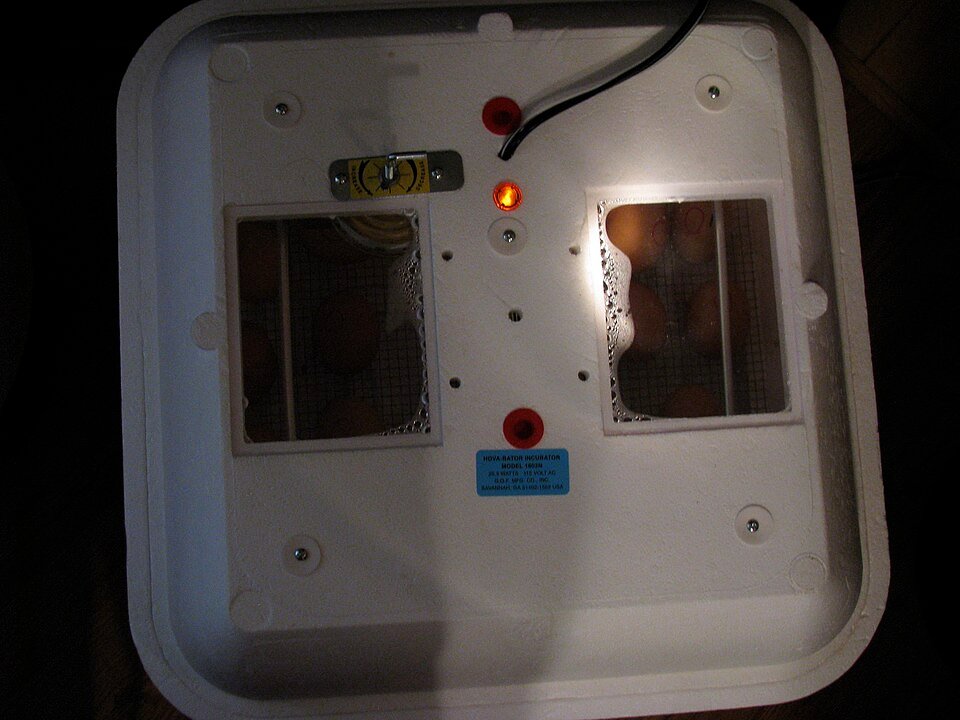
Choose an egg incubator by the largest single batch you plan to set, the size of those eggs and the capacity of the supplied turning arrangement. A “24-egg” label may refer to standard hen eggs in one configuration. Check the exact model’s larger-egg layout, included parts and hatching instructions before deciding it will hold your batch.
We may earn a commission when you buy through links on this page.
Define one batch before choosing a machine
Write down the number and type of eggs you expect to set together. Keep chicken eggs separate from a manufacturer’s quail, duck or goose capacity, and note whether your hen eggs are unusually large. Do not add different species’ maximum capacities as if the machine could hold all those totals simultaneously.
For a first purchase, use the batch you can actually manage rather than the largest advertised number within reach. Consider the room available for the incubator, your ability to follow its daily checks and the care arrangements for any chicks. Machine capacity is a setting limit, not a prediction of how many chicks will hatch or a reason to set more eggs than you can house.
Check the egg-size column, not only the model name
Our incubator comparison distinguishes the turning systems and controls of specific models. This guide supplies the sizing worksheet to use beside those specifications. Neither a product label nor a comparison table replaces the current instructions for the exact version delivered to you.
Read the capacity table, not just the model name
Brinsea's Maxi 24 EX specification gives an approximate capacity of 24 standard hen eggs or 12 large hen eggs, using the appropriate quadrants. That difference is large enough to change a purchase. The model number’s 24 does not promise space for 24 eggs of every size.
Suppose you plan a batch of 18 large hen eggs. Eighteen is below 24, but above the maker’s 12-large-egg figure for that arrangement. The standard-egg headline therefore does not establish that your batch fits. Ask the maker about your actual eggs and the required configuration, or choose a documented capacity that accommodates the batch without crowding.
The example is a specification check, not a report of our use. It does not mean every large chicken egg has the same dimensions or that eggs can be packed more closely than instructed. Brinsea describes capacities as approximate because egg size and shape vary. Leave unresolved fit questions with the manufacturer rather than creating your own higher rating.
Confirm what turns the eggs at that capacity
Find the turning diagram in the manual. Record whether the machine uses a disk, separate quadrants, rollers or a rack, and which parts come with the exact kit. A capacity available with an optional accessory is not the supplied capacity unless that accessory is included. Check the seller’s package contents against the maker’s model and part numbers.
A small machine can match a deliberately small batch; a larger nominal capacity is not automatically a better fit for the job. Confirm the intended egg size and supplied components for any model you consider rather than extending one maker’s arrangement to another. If you are comparing two sizes within a range, read both manuals: the larger model may use a different turning arrangement rather than simply more of the same tray.
Check that eggs can be placed and turned as the manual describes. Do not stack them, remove essential turning parts or block the intended movement to make a batch fit. If the desired count only works after a modification the maker does not support, the sizing question remains unresolved.
Distinguish setting space from the hatching arrangement
Read the instructions for changing from turning to hatching. Some designs require removing a turning component or using a mat or another supplied surface. Establish what must be moved, when the manual calls for that change and which replacement consumables you will need for later batches. Do not infer the process from an empty-machine product photograph.
The Brinsea Maxi 24 EX manual documents its model’s turning parts and hatching preparation. Use that as an example of the information to find for your own machine, not as instructions for an unrelated incubator. Control settings, water arrangements and timing belong to the supplied manual and the eggs you are incubating.
Plan a batch as one managed cycle. Adding a later group of eggs introduces another schedule while the first group is already developing. Do not assume a larger machine makes overlapping batches appropriate. If overlapping schedules are part of your intended use, ask the manufacturer or an extension poultry specialist what equipment and management the plan requires before buying.
Measure the operating space around the incubator
Record the unit’s dimensions with its lid and any external components in their working positions. Include water bottles, tubing, power leads and space to open the machine as instructed. A shelf that fits the closed incubator may not let you remove the lid or reach a refill point without moving the whole unit.
Follow the model’s room-temperature, ventilation and placement instructions. Choose the operating location before ordering and check where the cord will reach without creating a makeshift installation. A temperature display or app connection does not make every room suitable. Include power-failure planning in the setup discussion rather than treating a larger egg count as the main specification.
Cleaning needs space too. Check how the maker says to remove and clean parts between batches, and where they can dry and be stored. Keep the part numbers and manual with the machine. A configuration that fits today’s batch can become unusable if an essential tray is missing for the next one.
Size the rest of the project as well
Before setting eggs, prepare appropriate chick care and housing. This article is a purchasing guide, not a brooding or veterinary protocol. Incubator capacity does not define the care space, heat arrangement or equipment suitable for newly hatched chicks. Get the relevant husbandry guidance and supplies in place before the hatch rather than improvising after it.
For the longer term, revisit usable coop and run space and the equipment an adult coop needs. Those adult-housing guides help plan the eventual flock; they are not instructions for putting newly hatched chicks directly into an adult setup. If future accommodation is unresolved, reduce the planned batch or postpone it.
Finish with four entries on the buying sheet: planned batch and egg size, documented turning capacity, included configuration and complete operating footprint. If any entry is an assumption, ask the maker before purchasing. The suitable machine is the one that fits the documented job and your care plan, with no improvised extra capacity.
Common questions
Will a 24-egg incubator hold 24 large chicken eggs?
Not necessarily. Check the exact model's capacity table and turning configuration. The Brinsea example in this guide lists 24 standard hen eggs but 12 large hen eggs.
Can I use the quail capacity for chicken eggs?
No. Capacity depends on egg size and the appropriate turning parts. Use the maker's figure for the eggs and configuration you intend to use.
Does incubator capacity predict the number of chicks?
No. It describes the approximate number of eggs that fit the specified arrangement, not a guaranteed hatch result.
Cover photograph by Alex Ford from Raleigh, NC, USA, CC BY 2.0, via Wikimedia Commons. Original planning diagram by Backyard Henhouse.
