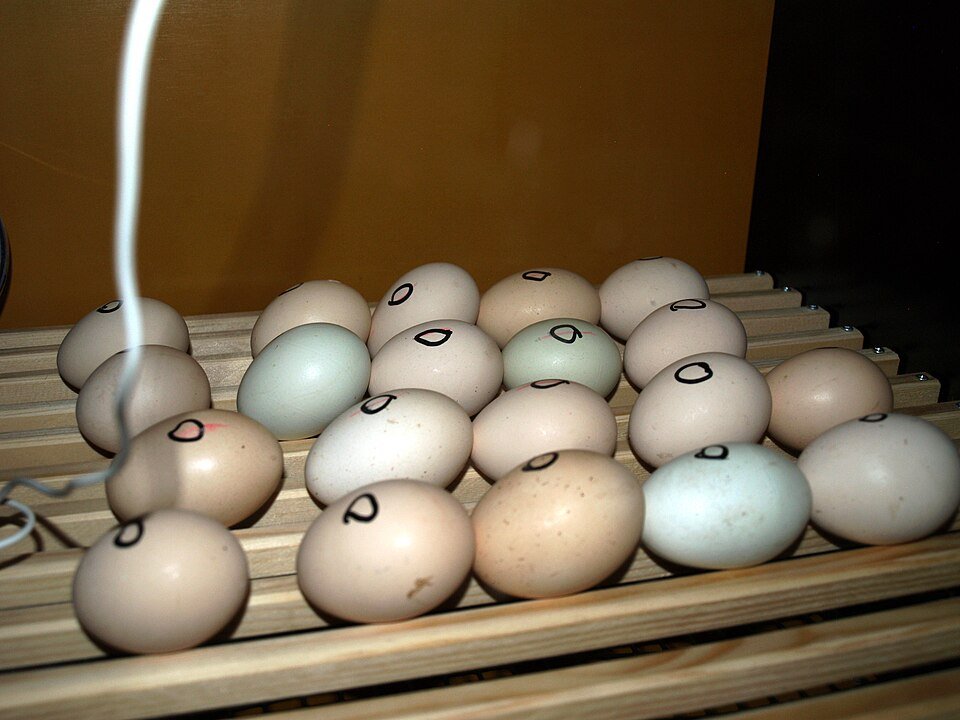
For a first batch of up to 22 chicken eggs, the Harris Farms Nurture Right 360 is a good starting point if you’re comfortable checking humidity and filling the water channels yourself. Choose the Brinsea Ovation 28 EX if you want a pump to regulate humidity from a set point, or the Maxi 24 EX Connect if phone alerts matter to you. Count the eggs that fit the supplied turner and decide how much of the water and turning routine you want the machine to handle.
We may earn a commission when you buy through links on this page.
Our picks at a glance
Start with the features that fit your setup.
Best starting point for a small batch
Harris Farms Nurture Right 360

A clear dome, an included turner and two water channels you fill from outside.
- Chicken eggs
- Up to 22
- Humidity
- Display, manually filled channels
Best for pump-regulated humidity with local controls
Brinsea Ovation 28 EX

Set humidity on the machine and the integrated pump meters water from an external supply.
- Chicken eggs
- Up to 28 standard
- Humidity
- Set-point control with integrated pump
Also in this guide
- Brinsea Maxi 24 EX ConnectBest for remote alerts and a small pump-equipped unit
- MATICOOPX 30 Egg IncubatorBest for a mid-size batch with a side refill bottle
- Farm Innovators 4250 Pro SeriesBest for a larger batch with an included turner
- GQF Genesis Hova-Bator 1588Best for hand turning or choosing a separate turner
Chicken egg incubators compared
| Product | Chicken-egg capacity | Turning supplied | Humidity management | Setup |
|---|---|---|---|---|
| Harris Farms Nurture Right 360 | Up to 22 | Automatic removable turner | Display, manually filled channels | Clear dome and outside fill ports |
| Brinsea Ovation 28 EX | Up to 28 standard | Programmable tilting carriers | Set-point control with integrated pump | Local controls and external water supply |
| Brinsea Maxi 24 EX Connect | About 24 standard or 12 large | Programmable turning disc | Set-point control with integrated pump | Local controls plus Wi-Fi app |
| MATICOOPX 30 Egg Incubator | Up to 30 | Automatic tilting tray | Display with external bottle refill | Side space needed for bottle |
| Farm Innovators 4250 Pro Series | Up to 41 | Included automatic tilting rack | Display, manually filled channels | Foam cabinet and hatch screen |
| GQF Genesis Hova-Bator 1588 | Up to 50 without a turner | Hand turning, motorized rack separate | Display, manually filled channels | Foam cabinet and removable bottom liner |
Six chicken egg incubators
01 / Best starting point for a small batch
Harris Farms Nurture Right 360
Best for: A first batch of standard chicken eggs when you want to see the turner and can manage the water yourself.
- Chicken eggs
- Up to 22
- Humidity
- Display, manually filled channels
Why consider it
- Turner included for the advertised chicken setup
- External ports let you add water with the dome closed
- Clear dome makes the turning area visible
Keep in mind
- Water channels and vent need manual attention
- Turner still has to come out for the hatching stage
- Physical fit can limit how many large eggs will turn
Read the full analysis of Harris Farms Nurture Right 360
Manna Pro’s Nurture Right 360 holds up to 22 chicken eggs in its supplied turning layout. The ring moves the eggs in the base and the clear lid lets you watch that movement. Check that your largest eggs can move freely without contacting the surrounding parts or the dome.
The Harris Farms manual gives separate fill ports for the water channels and instructions for the vent. The display reads humidity. You fill the channels and follow the instructions for ventilation. You can do routine top-ups without lifting the dome, but you still decide when to add water.
In the standard chicken program the turner stops before hatch. The manual also calls for removing the turner for the hatching stage. Plan the lid lift and tray removal ahead of time, even if you are relying on the countdown to stop turning.
Key specs: Up to 22 chicken eggs, circulated air, removable automatic turner, external water ports and humidity display.
02 / Best for pump-regulated humidity with local controls
Brinsea Ovation 28 EX
Best for: A keeper who wants the incubator to regulate humidity and prefers the controls on the unit.
- Chicken eggs
- Up to 28 standard
- Humidity
- Set-point control with integrated pump
Why consider it
- Humidity set point with built-in pump
- Programmable automatic carrier turning
- Settings available on the incubator itself
Keep in mind
- External water container and tubing need room
- Pump setup adds parts to check and clean
- Standard carrier capacity assumes standard-size eggs
Read the full analysis of Brinsea Ovation 28 EX
Brinsea’s Ovation 28 EX is rated for 28 chicken eggs with the standard carriers. Its digital controls set humidity and the integrated pump adds water as needed. The EX manual describes the tubing and supply arrangement. Leave room for that supply next to the unit, and check it as part of your routine.
The carriers tilt automatically during incubation, with a programmable turn interval. At the hatch transition, follow the instructions for shutting off turning and changing from the carriers to the hatching floor. The clear top helps you inspect the eggs and carrier movement during the run.
Choose carefully across the Ovation range. The linked EX is the pump-equipped version described here. Select the carriers for the size of eggs you actually plan to set, and verify that the pump draws water during the first setup.
Key specs: Ovation 28 EX, 28 standard-size chicken eggs with standard carriers, fan-assisted airflow, programmable turning and integrated humidity pump.

03 / Best for remote alerts and a small pump-equipped unit
Brinsea Maxi 24 EX Connect
Best for: A keeper who wants alerts away from the machine and has a batch that fits the supplied turning arrangement.
- Chicken eggs
- About 24 standard or 12 large
- Humidity
- Set-point control with integrated pump
Why consider it
- Local controls and remote alerts on the Connect model
- Pump regulates humidity from a set point
- Manufacturer separates standard and large hen egg capacity
Keep in mind
- Large hen eggs reduce usable capacity
- Remote features depend on network connectivity
- Water supply and pump tubing still need checks
Read the full analysis of Brinsea Maxi 24 EX Connect
Brinsea’s size chart lists about 24 standard hen eggs or 12 large hen eggs. The inserts divide the turning disc into quarters so you can choose a layout that fits your eggs. Check which inserts are supplied and what you would need to buy for a different size before using a number from the chart to plan a batch.
The EX Connect has an integrated humidity pump, programmable automatic turning and remote settings and alerts through the Connect app. Brinsea says local control continues if the internet connection is lost. For alerts away from home, check that the incubator can connect in the room where you will use it.
Follow the Connect manual when arranging the water supply and moving from the turning disc to the hatching stage. The plain EX and the EX Connect are separate models. This recommendation is for the Connect version linked here.
Key specs: USAC29C, approximately 24 standard or 12 large hen eggs per Brinsea’s capacity chart, programmable turner, pump and Connect app.

04 / Best for a mid-size batch with a side refill bottle
MATICOOPX 30 Egg Incubator
Best for: A keeper who wants more positions than the 22-egg model and can monitor humidity rather than using a pump to regulate it.
- Chicken eggs
- Up to 30
- Humidity
- Display with external bottle refill
Why consider it
- Thirty advertised positions for a chicken batch
- External bottle lets you refill without lifting the lid
- Included automatic turner and candler
Keep in mind
- Operator manages moisture using the display
- Bottle uses bench space beside the incubator
- Check egg fit throughout the tilting motion
Read the full analysis of MATICOOPX 30 Egg Incubator
The MEI-30 listing identifies a 30-egg incubator with fan-assisted airflow, an included tilting turner and a humidity display. The water bottle shown on the side feeds the refill system. Keep it accessible and check what the display does after you add water according to the unit’s instructions.
The bottle makes it easier to feed water from outside. The documentation for this listing identifies a display and refill system. Choose the Brinsea EX options if feedback-controlled water dosing is important to you. Watch the tray for movement before relying on it for a full batch.
The listing describes an automatic stop before hatch and an integrated egg candler. Read the instructions supplied with the specific unit to confirm the countdown and how to arrange the hatching surface. Check the egg fit with the tilting tray moving and leave space to the side for the bottle.
Key specs: MEI-30, up to 30 chicken eggs as listed, fan-assisted circulation, tilting turner, humidity display and external water bottle.

05 / Best for a larger batch with an included turner
Farm Innovators 4250 Pro Series
Best for: A larger chicken batch when you want an included automatic turner and have bench room for a foam cabinet.
- Chicken eggs
- Up to 41
- Humidity
- Display, manually filled channels
Why consider it
- Higher capacity with a turner included
- Displays humidity and time remaining
- Manual documents the change from rack to hatch screen
Keep in mind
- Larger cabinet takes more room to open and service
- Water channels are managed by hand
- Turner must be unplugged and removed for hatching
Read the full analysis of Farm Innovators 4250 Pro Series
The Farm Innovators 4250 includes a fan, an automatic rack and a display for temperature, humidity and days remaining. The advertised 41-egg capacity refers to the supplied rack in the linked incubator. Farm Innovators also sells the 3200 turner by itself. Check the number on the complete unit when ordering.
The 4250 instructions describe adding water to channels inside the base. Plan to check humidity and add water as directed. A humidity reading and a countdown on the same screen still require two different tasks: adjusting the water and preparing the machine for hatching.
At the end of turning the manual tells you to unplug and remove the turner and move the eggs onto the screen. Leave a place on the bench for the rack and lid. Plan to clean the screen and base separately and handle the foam body as the manual directs.
Key specs: Model 4250, up to 41 eggs in the supplied chicken rack, fan-driven circulation, digital readout, water channels and hatch screen.

06 / Best for hand turning or choosing a separate turner
GQF Genesis Hova-Bator 1588
Best for: A keeper who has time to hand turn or already has a compatible turner and wants to choose the layout independently.
- Chicken eggs
- Up to 50 without a turner
- Humidity
- Display, manually filled channels
Why consider it
- Incubator supports hand turning without a motorized accessory
- Circulated air and digital readouts
- Water liner and floor can be removed for cleaning
Keep in mind
- Linked base unit has no automatic turner
- Capacity changes when you add a rack
- Hand turning and water checks require a routine you can keep
Read the full analysis of GQF Genesis Hova-Bator 1588
The linked Genesis 1588 is the base incubator. The GQF manual gives instructions for hand turning and for using an optional motorized rack. The headline capacity of up to 50 refers to the layout without that rack. If you buy a turner, use the carrier count and egg-size guidance for the actual accessory.
This unit has circulated air, digital temperature control and a humidity reading. You manage the water in the bottom channels. It suits a keeper who wants to decide how to turn the eggs and is comfortable checking the water system. If you want a large rack in the box, compare the Farm Innovators 4250 instead.
Plan for access to the lid whenever you need to hand turn or service the water. The liner and floor give you parts to clean separately, while the foam body and powered top need the care described in the manual.
Key specs: Genesis 1588, up to 50 chicken-size eggs without a turner per the listed capacity, fan, humidity display and manual water channels.
How we chose
We checked seven listings and selected six complete tabletop incubators. We compared chicken-egg capacity, what turns the eggs, what regulates humidity, and what you need to take apart after a hatch. Manufacturer manuals support five of the picks. For the MATICOOPX, the listed features come from the exact brand listing, so check the supplied instructions before setting it up. We excluded accessory-only turners and left out a second small viewing-dome model to give space to a unit that supports hand turning out of the box. The comparison covers documented specifications and workflow. Hatch rates depend on the eggs and the conditions throughout incubation, so we give no model a hatch-rate score.
Threads about humidity readings and temperature checks in a new incubator informed two checks below. Figure out what the water control actually does and verify how the machine behaves before loading your eggs. An individual report can point to a test worth doing at home. It can’t tell you how often a model has a problem.
How to choose a chicken egg incubator
Count eggs with the turning system installed
Use the manufacturer’s number for chicken eggs of the size you expect to set. An incubator product name may be based on standard hen eggs or a capacity that assumes you’re using a particular tray. Larger eggs can take more space, and an optional turner may hold fewer eggs than the same machine’s bare floor. Check what’s included in the offer. An incubator can be complete for hand turning even if its motorized turner is a separate accessory.
Say you expect to set 18 large chicken eggs together. The Maxi 24 EX Connect looks like it has six places to spare, but Brinsea lists about 12 large hen eggs on its capacity chart. For that batch, check the fit in a machine with a suitable tray or plan smaller batches. With 18 standard-size eggs, the same nominal 24-egg disc might be adequate. Match the supplied carrier and its movement to the size of your eggs as well as the number on the box.
Decide who manages the moisture
A display shows the relative humidity the sensor reports. Passive water channels add moisture by evaporation. On some models you fill them through a port from outside. Other models put a bottle beside the unit to keep a channel supplied. You can still be responsible for deciding which channel to fill and when. Follow the model’s instructions for its water system and ventilation.
A pump-equipped unit senses humidity and meters water in response to a set point. You still need to fill the supply, set it up correctly, verify it can deliver water, and follow the manual’s instructions for ventilation. Pick a pump model if that difference matters to you. It doesn’t change the need to check the reading and the water supply on your rounds.
Make turning and the hatch transition part of the purchase
Manual turning means you need a schedule you can keep. Automatic turning takes that repetitive step over during incubation, but the hatch setup can still require removing a ring, lifting carriers out, turning the motor off, or fitting a hatching mat according to the manual. Changing the tray at the end is easier when the lid and cables have room on the bench. Mississippi State University Extension’s chicken incubation guide says to stop turning chicken eggs after day 18. Use the incubator’s instructions to prepare for that stage. Check how its timer counts down or whether you need to stop the turner yourself.
Allow space to open it, refill it, and wash it
Measure the whole working footprint. A clear dome needs overhead space to lift it and a safe place to set it down. An external water bottle or hose adds space beyond the cabinet. A machine that fits snugly under a shelf may still be awkward to refill or to change over for hatch day. Think through where the tray, lid and water parts will go when you clean them.
Check the incubator before loading eggs
Run it empty in its intended location
Choose a level indoor surface in a stable room, away from direct sun and drafts. Give the incubator the warm-up and stabilization time specified in its instructions. Set it up with its intended tray and water arrangement. Get familiar with the display, alarm and vent before the eggs go in. Mississippi State’s hatchery guide explains why temperature, humidity, ventilation and turning all matter.
Check one function at a time
Identify which channel or reservoir the instructions call for first. Confirm that water reaches the right place and that the display responds after the unit settles. Check the turning mechanism with its test procedure if it has one. On a pump model, verify the tubing is seated, the supply has water, and the pump can draw it. If you compare readings with a reliable reference, put it where the manufacturer recommends and allow both readings to settle before making a change.
Plan the cleanout before the first hatch
Check which inserts, channels and trays can be removed. Keep the electronics and fan dry and follow the maker’s cleaning instructions for wipeable and washable parts. A shallow tray you can lift out and a water system you can reach often save more time after a hatch than another setting on the screen. Let parts dry completely before reassembling or storing the unit.
FAQ
Is an external water bottle the same as automatic humidity control?
A bottle can keep a water channel supplied without measuring or changing humidity on its own. Set-point control uses a humidity reading to tell a pump when to add water. Look for a documented humidity set point and pump if you want the latter.
How big an incubator should I buy for 12 to 18 chicken eggs?
Start with the chicken-egg capacity of the tray included in the offer. A 22- or 24-egg model may fit a batch of standard hen eggs, while the same tray can hold fewer large eggs. Confirm the clearance for the eggs to turn and for the lid to sit normally.
Can I buy an incubator without a turner?
Yes, if its instructions support hand turning and you can keep the schedule. Check which accessories are included before ordering. A compatible turner can change how many eggs fit and what you have to remove at hatch time.
When do I stop turning chicken eggs?
Mississippi State Extension recommends ending turns after day 18 for chicken eggs. The steps depend on the model. Check how to turn off the motor, remove the tray or use the hatching surface before you reach that point.
Does a Wi-Fi incubator need internet to keep running?
That depends on the model. Brinsea says the Maxi 24 EX Connect continues controlling the incubator locally during a loss of internet. Remote monitoring and notifications depend on connectivity. A power outage is a separate issue.
Can a more expensive incubator guarantee a better hatch?
A pump, clearer controls or a reliable turner can make the job easier to manage. Results also depend on fertility, handling, and the conditions through the hatch. Compare the tasks each model takes over and choose the one you can check consistently.
Which incubator should you buy?
Choose the Nurture Right 360 if the supplied 22-egg tray fits your batch and you can manage the water channels. Choose the Ovation 28 EX if you want a pump and local controls. If you need remote alerts, check the Maxi 24 EX Connect’s tray against the size of your eggs before paying for the app features.
Cover photograph by Santeri Viinamäki, CC BY-SA 4.0, via Wikimedia Commons.
