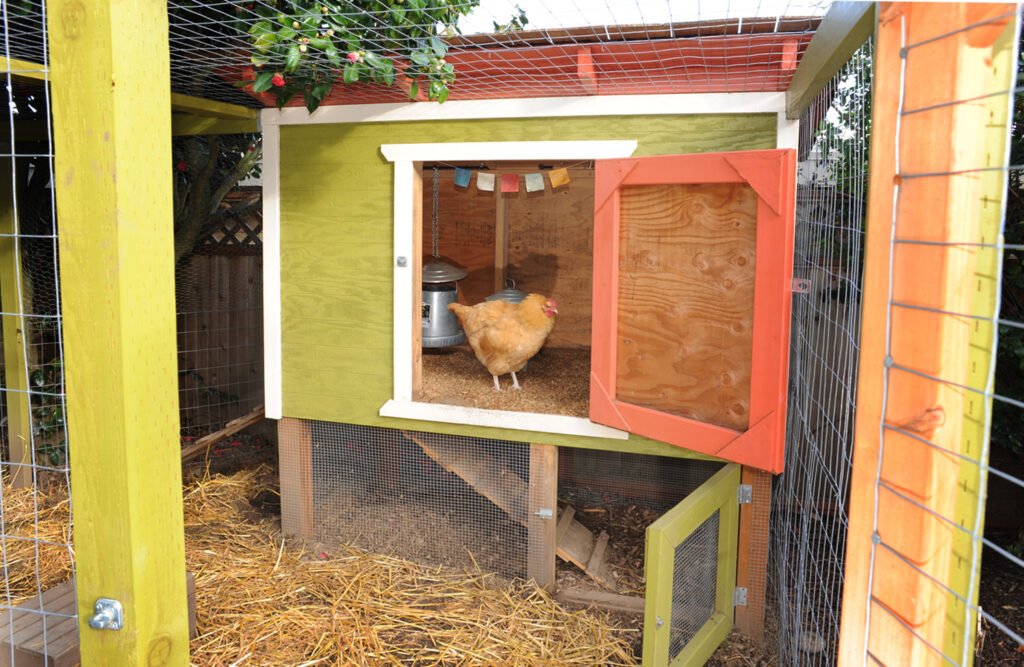
A chicken coop is the shelter that houses a flock, with space for resting, protection from weather and predators, and access for routine care. A run is the enclosed outdoor area. Some products combine the house and run, but the two spaces still have different jobs and should be measured separately.
We may earn a commission when you buy through links on this page.
Know the coop layout
- HOUSEIndoor shelter
- RUNOutdoor enclosure
- ACCESSDaily care
That distinction clears up much of the confusion in product listings. A photograph may show a long enclosure with a small raised house at one end. The full footprint is not all indoor living space. Before comparing bird-capacity claims, identify which part is the shelter, which is the run and what the birds can actually use.
The house and the run
Utah State University’s housing guide treats shelter layout and access for upkeep as practical requirements. Oregon State Extension’s coop-design guidance distinguishes housing needs according to outdoor access. The takeaway for a first purchase is to describe the way the flock will live, not just the dimensions of a package.
A stationary coop stays in one position. A mobile coop or chicken tractor is designed to move, but the precise arrangement varies: some include an enclosed house, some are floorless pens, and some combine features. Do not assume that a frame with wheels supplies the same protection or indoor area as a fixed house.
| Part or term | Main role | What to verify |
|---|---|---|
| Coop / house | Shelter and indoor care arrangement | Usable internal measurements and access |
| Run | Enclosed outdoor area | Separate area and enclosure design |
| Nest box | Shared egg-laying compartment | Internal size, count and access |
| Roost | Resting perch | Space, position and support |
| Tractor / mobile coop | Movable housing or pen design | What shelter and barriers are actually included |
Use the terms as questions when shopping. Does the stated length include a run? Is the house enclosed on all sides? Is there an accessible area beneath it? Which measurements are internal? Ask for a labeled drawing if a photograph does not answer those questions.
What belongs inside
An adult laying flock needs an arrangement for roosting, nesting, feed and water, along with usable floor area and ventilation. A roost is where birds rest; an individual nest box is shared laying space. They are not interchangeable furniture, and the number of nests does not establish the capacity of the whole house.
Our essential coop setup checklist explains the equipment and housing checks in more detail. Use it to identify what a purchased structure actually includes. A listing may show feeders or accessories for illustration without supplying them in the package.
For the nest calculation, see how many hens can share a nest box. Keep that calculation separate from the floor plan. A unit with several laying compartments still needs enough usable shelter and outdoor space for the proposed flock.
Why external dimensions are not enough
An external length and width describe the outside of something, which may include overhangs or a combined run. Internal walls and equipment can change what is usable. If a seller gives one area for the whole enclosure, you still need to know how that area is divided.
Use the coop-and-run space guide to compare indoor and outdoor allowances independently. Record your flock size, the guidance you are following and the measurements behind your calculation. Do not choose the largest advertised bird count and work backward until the numbers appear to fit.
Also think about how the enclosure will be used during bad weather or other periods of confinement. Daily outdoor access and extended time indoors are different situations. If the dimensions or intended use are uncertain, resolve those questions before bringing the birds home.
Security is a complete enclosure problem
A house needs doors, closures and protected openings that suit the local risks. A run may need protection at its sides, top and base. Treat each transition as part of the design: a robust wall does not make a loose latch or a gap underneath disappear.
The hardware-cloth guide explains opening size and wire thickness. Materials described loosely as “poultry wire” are not necessarily equivalent. Ask for the specific material and how it is attached rather than inferring protection from the word coop.
Avoid treating an automatic door or any other accessory as the entire security system. The enclosure still requires inspection, and you need a plan for equipment failure or an obstruction. No accessory makes its surrounding structure irrelevant.
Design for the person who will care for the flock
Open the access doors in the proposed layout and imagine removing a tray or reaching the far corner. Check whether nearby fences, walls or paths interfere. A compact package can still be inconvenient if the keeper cannot reach the area that needs attention.
Our coop cleaning guide separates regular upkeep from a full cleanout. Use those tasks to evaluate a design before buying it. Space for the keeper to work is a practical requirement, even though it may not appear in an advertised bird-capacity number.
Consider storage and the surrounding area too. Feed that cannot be kept secure creates a different problem from the house itself. The guide to managing rats around a coop covers food access, exclusion and protected control rather than promising that a new enclosure solves every rodent issue.
Match the plan to your birds and climate
A finished adult coop is not automatically a brooder for newly hatched chicks. Decide which birds the setup is intended for and get age-appropriate care guidance before purchasing equipment. This introduction does not provide a brooding temperature schedule or a treatment plan for sick birds.
For cold weather, review winter coop preparation. Weather protection and ventilation have to work together. Do not assume that a listing described as insulated or winter-ready has already answered the questions relevant to your location and flock.
A sensible first shopping list
Write down the flock you intend to keep, how it will have outdoor access and who will care for it. Then list the verified house and run measurements, the equipment included, the access arrangements and any unanswered questions. Check applicable local requirements before committing to a site or structure; this article does not establish what is allowed at your address.
With that worksheet, use the chicken coop buying guide to compare actual options. A useful coop is a workable housing and care arrangement. The name on the listing, a decorative roof or a large advertised bird count cannot establish that on their own.
Common questions
Is a coop the same as a run?
No. The coop is the shelter; the run is the outdoor enclosure. A combined product may include both, but their areas should still be identified separately.
Does a chicken tractor include a house?
Not always. Mobile designs vary. Check what shelter, flooring, run and barriers the particular design includes.
Do more nest boxes mean room for more chickens?
Not by themselves. Nest boxes are shared laying spaces. Usable house and run area, roosting arrangements and other needs still require separate checks.
Can I use an adult coop as a chick brooder?
Do not assume so. Newly hatched chicks have age-specific care and brooding needs that a standard adult enclosure may not meet.