Choose chicken enrichment by the activity it makes available, the space it leaves usable and the response of the actual birds. Start with one clear opportunity to investigate, move, peck or explore, then check access and maintenance. A toy that blocks the feeder, cannot be inspected or frightens the birds needs a different arrangement, regardless of how many features it has.
We may earn a commission when you buy through links on this page.
Begin with the available space
Sketch the run as you use it, including gates, the route to clean it, feeding and drinking equipment, and the places birds already use. Add the intended activity to that sketch before buying anything. Include its movement, not just its stationary footprint. A hanging holder can swing into a route even if the small body looks easy to fit.
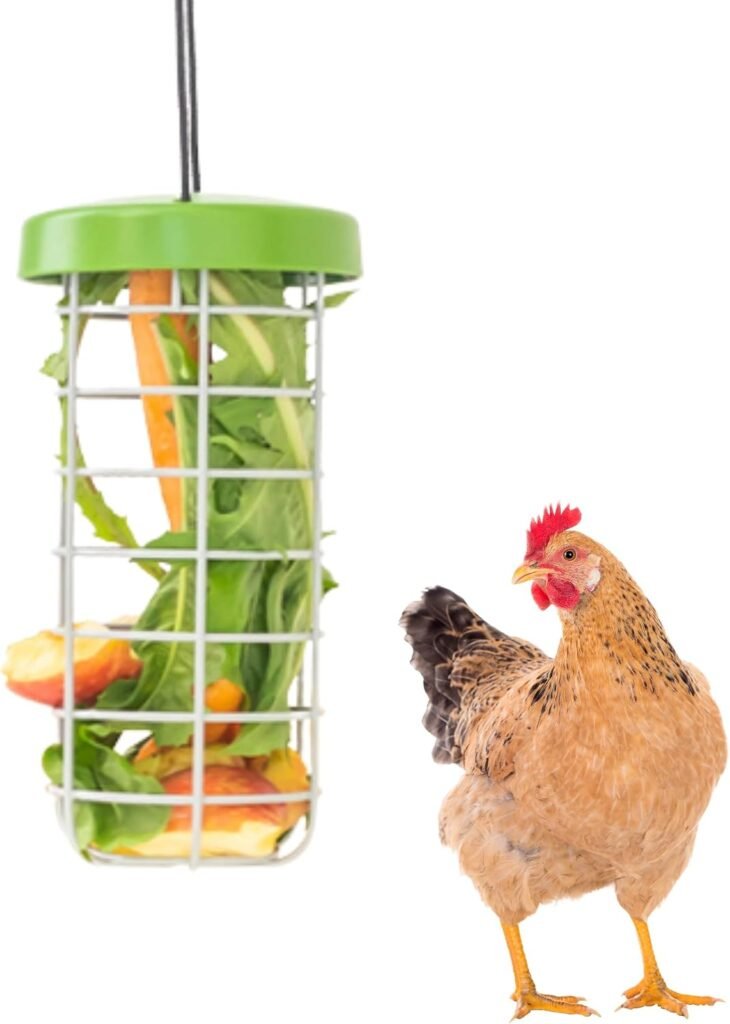
For example, the Caddi in the featured photograph is an open hanging holder. Its manufacturer page identifies an adjustable nylon string, a hook and a body measuring 7.9 inches tall by 3.1 inches across. Those dimensions identify the item; they do not establish the clearance needed in every run or the right hanging height for every bird.
A larger activity structure creates a different decision. Its legs, ladders and platforms can occupy ground you currently use to reach equipment. If you must move the waterer into an awkward location or squeeze through a blocked gate to fit it, reconsider the placement. Adding more components does not by itself create more usable space.
Check an activity through three decisions
Match the activity to a workable arrangement
A suspended dispenser or holder needs an appropriate attachment point and room for its movement. A ground stake needs suitable ground and a stable installation. A roller needs an accessible area where it can move and be retrieved. A climbing structure needs a suitable floor location, assembly and clear access around its parts. These are different jobs, even when a shop puts them all in a toys category.
You do not need one of every format. Choose a specific opportunity and observe how it works before making the arrangement more complicated. Our chicken-toy comparison separates the selected formats and their documentation. It does not rank them by a guaranteed number of hours of use or a promise to change laying behavior.
For a hypothetical layout check, mark a proposed structure on the ground without giving the birds access to loose measuring materials. Walk the servicing route and see whether doors and containers can still be used normally. This is a planning exercise, not a stability test or a minimum-space calculation. It can reveal an inconvenient position before a large purchase arrives.
Preserve the basic opportunities
An accessory should add to a workable environment rather than become the reason an existing function is lost. If the new structure blocks access to the birds’ established perching arrangement, review that conflict first. The roosting-bar comparison addresses the separate equipment choice; a small swing or decorative ladder does not establish that the nighttime roosting provision is adequate.
Keep other established activity areas accessible too. If you are choosing equipment for a dust-bathing area, the dust-bath container comparison addresses that format. A food holder cannot substitute for every other activity just because it is sold as enrichment. Think in terms of opportunities the birds can reach, with a route to leave, rather than the total count of objects in the run.
The decisions also depend on the actual users. A manufacturer’s assembled height is a product measurement, not a reach recommendation for every bird. A nominal dispenser volume does not establish access for a particular flock. Check how the arrangement works for the individuals present instead of converting a convenient specification into a stocking rule.
Decide on contents independently
For food-based activities, choose suitable contents and an appropriate feeding plan separately from the container. A full chamber is not a daily portion, and slow release is not proof that no bird can monopolize access. This guide provides no recipe, ration or instruction to substitute a toy for the normal feeder.
University of Maryland Extension notes that scratch grains are unnecessary when birds receive a complete diet and can dilute that diet. Do not increase treats simply to keep a new dispenser operating. If you are unsure about the appropriate diet for the birds, ask a qualified poultry adviser rather than use the product’s storage capacity as the answer.
Also check whether the contents work with the actual openings. An open cage and a small-hole dispenser retain or release items differently. The produce pictured in an advertisement is a commercial illustration, not a complete nutrition guide. We have not tested release rates or verified a claim that one device prevents waste or pests.
Make inspection and removal easy
Choose a location where you can see and reach connections, cords, the body and closing parts. If you have to dismantle half the run to inspect the item, the installation needs reconsideration. Follow the supplied assembly and care instructions; a waterproof cap does not make an open holder sealed from weather, and one washable part does not establish a cleaning method for everything nearby.
The Association of Avian Veterinarians’ chicken-enrichment guidance emphasizes regular inspection and removing broken or loose toys to prevent ingestion of string fibers. Apply that inspection principle without assuming one material is maintenance free. A cord or small part that remains attached today still needs checking as the equipment is used.
Remove an item that is damaged, loose or creating an access problem. Do not keep it available merely because birds still use it or because replacing it is inconvenient. This is an equipment decision. It is not a set of instructions to treat an injury, free an entrapped bird with improvised tools or diagnose the cause of feather damage.
Observe the birds and the work routine
Watch the first use of a new arrangement and the routine after it has been in place. Note whether birds can approach and leave, whether necessary equipment stays accessible and whether the item can be serviced as intended. One photograph of a bird beside a toy cannot settle those questions for a different flock.
Keep the observation simple: the activity, its position, who used it and what needed adjustment. There is no need to invent an engagement score or force every bird to use the same object. If the item is ignored, frightened responses appear or another function becomes harder to access, reconsider or remove the arrangement. More treats or a more elaborate purchase are not automatic fixes.
Persistent harmful behavior, injury or other health concerns need appropriate professional advice. The useful outcome of this selection process is a workable, inspectable activity that fits the space and the actual birds. It is not a product-based guarantee of happiness, feather condition or egg production.
Common questions
Do chickens need every kind of toy?
No fixed shopping list is established here. Choose an opportunity that fits the environment, preserve necessary access and observe the actual response. Buying all the formats at once can make placement and maintenance harder to assess.
Is the capacity of a dispenser a daily treat allowance?
No. Capacity describes the container. The suitable diet and amount need a separate decision for the birds, and a food-based toy does not justify replacing the normal feeding arrangement.
What should I do with a broken or loose toy?
Remove it from access and follow the maker’s directions for replacement or repair. Inspect connections, cords and small parts before using it again. Seek appropriate professional help for an injury or entrapment rather than treating it as a shopping or maintenance question.
Featured product image from the exact Omlet via Amazon listing. The holder, contents and chicken belong to the selected commercial listing photograph. They do not show our flock or establish a diet, safe installation or a behavioral result.