Clean chicken drinking cups under the exact equipment instructions, treating the bowl, hidden valve and water source as separate tasks. Remove accessible dirt, service only the parts the maker permits, rinse and reassemble as directed, then check filling and actual drinking access. A lifted insert does not expose every valve part, and a clean-looking bowl does not establish disinfection. Keep working water available while equipment is being cleaned or a fault is resolved.
We may earn a commission when you buy through links on this page.
Identify the cup before taking it apart
Record the actual cup, reservoir and applicable instructions. A plastic auto-fill bowl, a stem-activated cup and a metal-bowl assembly can contain different valves and retaining parts. Do not use another product’s disassembly sequence because the visible bowl has a similar shape.
Our drinking-cup comparison distinguishes those mechanisms and formats. Use the exact manufacturer’s care information for the one installed. A removable insert may expose part of a bowl while leaving the valve, elbow or source untouched; the phrase easy to clean does not identify every part that needs attention.
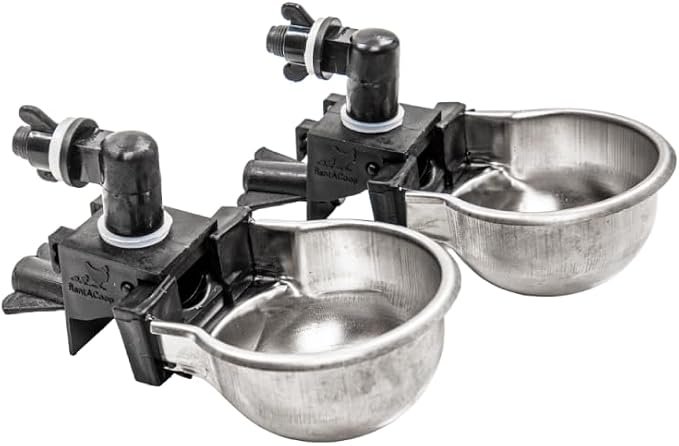
The photograph above shows metal bowls attached to plastic valve bodies. The material of the drinking surface is therefore different from the complete assembly’s materials. A metal appearance does not approve an abrasive, chemical, heat treatment or disassembly method for the parts behind it.
Keep three care tasks separate
Keep routine equipment care outside the home
CDC's backyard-poultry guidance calls for cleaning poultry equipment outside the home and washing hands after handling birds or their environment. Apply that handling guidance while following the equipment’s own care instructions. A small cup that fits in a household sink is still poultry equipment.
Plan a place to keep the applicable parts and instructions organized during service. The purpose is to avoid confusing similar components or losing a required spring, retaining piece or seal. This article prescribes no disease-control work area, outbreak procedure or chemical mixture.
Keep the care question separate from a health assessment. This guide addresses routine equipment cleaning. A clear-looking bowl, a photograph or a particular material does not establish that water is hygienic or diagnose a problem in the flock.
Clean the accessible drinking surface
Use the exact product’s directions to remove accumulated dirt from the bowl and any removable insert. Check how the insert is intended to be lifted and replaced. Do not assume it is the entire valve or that every cup has the same removable interior.
The current RentACoop bucket-waterer manual specifies warm water, mild dish soap and thorough rinsing for that equipment’s maintenance. It also warns against bleach, harsh chemicals and abrasive cleaners for that bucket. Those are model-specific instructions, not a universal approval or ban for every poultry cup and disinfectant.
Follow the applicable procedure rather than choosing a stronger-looking treatment because a stain remains. Cleaning directions and a chemical’s own label must be compatible with the exact equipment and intended use. This guide supplies no concentration, soaking time or contact-time recipe.
Service the hidden valve only as directed
Look at the actual assembly diagram before releasing clips, tabs or screws. An insert, bowl and valve base can be different pieces, and removing one does not automatically expose or clean the others. Stop if the part or correct release method cannot be identified.
The RAC Paws metal-cup manual identifies tabs, small retaining nodules and a load spring in its cleaning procedure. It warns to release the base carefully and slowly because of the spring and retaining parts. That is not a general instruction to pry apart every drinking cup.
Use that sequence only for the matching component and keep the specified parts together. Follow the maker’s directions for clearing the applicable water passages. Do not improvise with another cup’s tool, force or replacement part merely because the outlet appears obstructed.
Include the reservoir and supply route
A bowl can look clear while its source, connecting parts or flow path still need attention under the relevant instructions. Identify which reservoir supplies the cup and how it is refilled and maintained. Automatic bowl filling does not mean the external source cleans or refills itself.
The RentACoop bucket manual calls for water-level checks, regular cleaning and inspection of its bucket and stand for alignment, stability, cracks and wear. Keep those tasks with that equipment’s care record. A cup-only kit connected to another reservoir needs the applicable instructions for that source as well.
If access to the source or hidden parts makes routine care impractical, the broader waterer comparison can help assess a more maintainable complete format. Repeatedly wiping the visible bowl does not resolve an inaccessible reservoir or an unidentified valve assembly.
Reassemble the exact fitting arrangement
Return the prescribed parts in the order and positions shown for the matching model. Check that the intended seals and retaining parts are present. A spring or washer from a similar-looking cup should not be treated as an approved substitute without confirmation.
Use the cup-fitting guide to revisit the container, retaining parts and movement clearance. The exact equipment instructions still control. This article gives no universal washer order, extra-tightening rule or sealant recommendation for reassembly.
For a cup that regulates through movement, preserve the clearance its maker requires. A bowl resting on another surface or a cover obstructing the mechanism is an installation question to resolve, not evidence that a stronger cleaning chemical is needed. If the arrangement cannot be identified, contact the maker before returning it to use.
Check operation before treating the job as finished
Under the exact product’s directions, observe that water reaches the drinking point and is regulated as intended after service. Check the assembled connection and accessible route for a problem. An empty bowl can reflect interrupted supply; continuous flow can have several equipment causes. Neither observation alone identifies a disease or a particular failed part.
Then separately observe the actual birds using the working arrangement. A bowl containing water is not proof that every bird drank, especially when the drinking mechanism has changed. Keep working water available while an equipment or access problem is resolved rather than withholding it to force use of the serviced cup.
Record any persistent fault and use the exact maker’s troubleshooting or support route. A briefly dry fitting or one successful refill is useful information at that time, not a guarantee that a recurring problem has been eliminated.
Keep a care record that matches the equipment
Note the exact model, applicable procedure, parts serviced and any issue that remains unresolved. Keep the instructions available for another caregiver. The record should distinguish a bowl wipe, valve service and reservoir cleaning instead of calling all three the cup was cleaned.
Choose routine checks according to the equipment, actual use and care plan rather than treating one generic calendar as sufficient for every installation. More frequent visible dirt, an obstructed passage or difficult service access should prompt attention to the arrangement and instructions. No automatic-refill label establishes a period without care.
Finally, do not equate appearance with disinfection. This guide documents routine equipment tasks and model-specific limits; it does not certify a cleaned result, provide an outbreak protocol or prescribe a chemical treatment for the flock.
Common questions
Is removing the cup insert enough to clean the whole waterer?
Not necessarily. The insert, bowl, valve and reservoir can be different parts with different care instructions. Identify the exact equipment and service only the prescribed components. Cleaning the visible bowl does not establish that a hidden valve or the source has been maintained.
Can I use one bleach or soaking recipe for every cup?
No universal recipe is provided here. Follow the exact equipment instructions and the applicable product label. The cited RentACoop bucket manual warns against bleach, harsh chemicals and abrasive cleaners for that equipment; do not transfer a chemical approval or prohibition indiscriminately to another assembly.
Why must I be careful when removing a valve base?
Some assemblies contain retaining tabs and a spring. The RAC Paws metal-cup manual specifically identifies those parts and a careful release procedure. Use only the matching instructions; this is not permission to pry apart another cup or substitute similar-looking internal parts.
Featured product image from the exact RAC Paws by RentACoop via Amazon listing. The photograph distinguishes metal bowls from their plastic valve bodies. It does not show a cleaned or disinfected result, and it is not an instruction to dismantle a different cup. Original care worksheet by Backyard Henhouse.