Use hemp bedding on a suitable dry coop floor, following the selected product’s setup instructions and removing damp or soiled material as conditions require. Plan the initial quantity by usable floor area and the specified depth, then keep a dry reserve. Hemp does not remove the need to fix a leak, inspect the floor, or carry out a full change when the bedding needs it.
We may earn a commission when you buy through links on this page.
Treat the first fill as the start of a maintenance routine, not the beginning of a promised number of cleanout-free months. Record the exact product and package, how much you spread, and what you remove during ordinary care. Those details make the next purchase and the next change easier to plan.
Check the housing and the selected product first
Look at the bare floor and the areas around doors, corners, nests, and drinking equipment. Resolve water entering the building or equipment that repeatedly spills before covering the problem. A dry surface on top of a wet patch does not establish that the material underneath is suitable to leave in place.
Confirm that the product is loose poultry bedding rather than hemp fiber, a nesting pad, a pet litter with extra ingredients, or a similarly named package. Read its actual setup and maintenance directions. A brand family can contain more than one format and size, so retain the label from the package you use.
Our hemp-bedding comparison distinguishes the selected packages, their nominal weights, published loose volumes, and the information still missing. Use it when choosing a supply quantity; the task here is setting up and maintaining that material on the floor.
Set up, inspect, replenish
Use the product's depth guidance in context
Published setup guidance is not identical across hemp products. Aubiose's poultry guide describes an eight-to-ten-centimeter layer for its poultry-bedding arrangement. That is approximately 3.1 to 3.9 inches. It is product guidance in its stated context, not a depth established for every brand, floor, or flock.
For a different example, RentACoop describes its bulk hemp package as 300 liters with about 10.6 cubic feet expanded, and gives a coverage example tied to a two-inch depth. Keep the quantity and the assumed depth together. Do not take a shallow coverage example from one page and treat it as the correct setup instruction for every other bag.
If the product’s directions or the housing arrangement leave the depth unclear, ask the supplier or an appropriate poultry adviser before buying a whole supply. The goal is a workable floor and care routine, not finding the largest advertised coverage number.
Calculate an initial amount without promising a service life
The geometric calculation is usable floor area multiplied by depth in feet. For a hypothetical 30-square-foot floor and a three-inch layer, 30 × 3/12 gives 7.5 cubic feet, approximately 212 liters. Three inches is the stated assumption for this example, not a general recommendation.
If you compare that example with a nominal 300-liter supply, about 88 liters would remain before allowing for spreading losses or material kept in reserve. That does not prove the pack will support a specific number of top-ups or full changes. Actual removal and moisture conditions determine how quickly the remaining material is used.
For a product sold only by weight, obtain usable loose volume for the exact package rather than converting pounds with another brand’s density. Compression and material differ. Outside bag dimensions also describe a storage object, not a verified amount of loose bedding.
Use the floor that birds can actually occupy in the calculation. A combined coop-and-run footprint or an outside frame dimension can give the wrong input. Our coop buying guide explains the distinction between overall size and usable housing space.
Spread the material without burying operating parts
Prepare the floor according to the housing and bedding instructions. Distribute the planned amount rather than piling it only in convenient spots. Check corners and the areas beneath occupied roosts, and keep track of how much of the package was used for the initial fill.
Open and close the ordinary doors after spreading. Check cleaning access, ramps and any moving automatic panel in the condition in which the coop will operate. A layer that interferes with the panel’s path is an equipment problem to resolve, not evidence that the new bedding is unsuitable in every location.
Keep the floor-bedding decision separate from the design of a nest or roll-away egg path. A loose material that works on a floor is not automatically the correct depth or format inside every nesting assembly. Follow that assembly’s instructions rather than adding material until it looks like the floor.
Inspect the layers, not just the visible surface
During ordinary care, look at the places most likely to receive moisture and droppings. Check beneath the upper layer where appropriate rather than relying on the color or dryness of the surface alone. Note repeated wet spots and identify their cause.
Remove damp or soiled material as the applicable routine requires, then replace what was removed with suitable clean bedding. Do not hide a leaking drinker by repeatedly covering its wet patch. Recheck after repair to see whether water is still reaching the floor.
Aubiose’s guide provides its own cleaning schedule and says that complete replacement depends on the number of birds, coop size and use. That schedule does not replace inspections between cleanings or establish a universal calendar for all hemp bags. Inspect the actual condition and follow the relevant instructions, including any full change needed earlier.
Match a scoop to the actual task
If you choose a fine or siftable product, compare its texture with the scoop openings and the debris to be removed. Do not assume that a scoop chosen for sand, pellets, or a different bedding will separate this material equally well. We have not tested those combinations.
A small trial can make the question concrete. Record whether the tool removes the soiled material you intended, how much clean bedding comes out with it, and whether the remaining floor can be maintained appropriately. If the tool leaves the problem behind, change the routine rather than treating the word siftable as a guarantee.
Keep the trial’s purpose limited. It can show whether a cleaning method suits your own task; it cannot prove a manufacturer’s dust percentage, diagnose the flock, or establish comparative absorption. Those are separate claims with different evidence requirements.
Store a clean reserve and handle used material separately
Keep unused bedding dry and protected after opening, and make it easy to distinguish from removed litter. Plan where the bag will stand and how supplies will be moved without passing through used material. An opened package should not be assumed weatherproof because its unopened covering looks substantial.
The CDC's backyard-poultry guidance advises cleaning poultry supplies outside and washing hands after handling birds or their environment. Follow that hygiene guidance when dealing with tools and removed bedding. Keep poultry-cleaning tasks separate from household food preparation.
Disposal or composting is a separate task with its own process. A compostable-material claim does not mean freshly removed poultry bedding is finished compost ready for every garden use. Follow appropriate composting guidance for the intended destination rather than treating a package slogan as the complete procedure.
Decide what to change before the next fill
At the next change, compare the initial quantity, removed material and remaining reserve with the plan. A different package size may answer a storage or handling problem. A different scoop may answer a separation problem. Neither change will repair water entering through the roof or a spill beside the drinker.
If hemp does not suit the actual cleaning routine, our general bedding comparison explains the documented material alternatives. Choose according to the housing and care task rather than defending a purchase because a label promised a long service life.
Keep the useful record simple: product, quantity, initial depth assumption, problem areas, removals, and the next supply needed. Update it when the flock, equipment or building changes. It should help a caregiver inspect the coop, not replace inspection with a date on a calendar.
Common questions
Is there one correct depth for every hemp bedding?
Use the selected product's instructions and the actual housing plan. Published product guidance and coverage examples differ. Keep their depth assumptions attached to their quantities rather than transferring one maker's setup to every hemp bag.
Can I keep adding fresh hemp instead of removing wet material?
Fresh material does not establish that a damp layer underneath is suitable to leave. Inspect the affected area, remove material as the relevant routine requires and address the source of repeated wetting. A leak is a housing or equipment problem as well as a bedding-maintenance problem.
How can I estimate the first fill?
Multiply usable floor area by the intended depth in feet, then compare it with the exact package's usable loose volume. A hypothetical 30-square-foot floor at three inches needs 7.5 cubic feet, about 212 liters. That is a geometric example, not a universal setup depth or a service-life prediction.
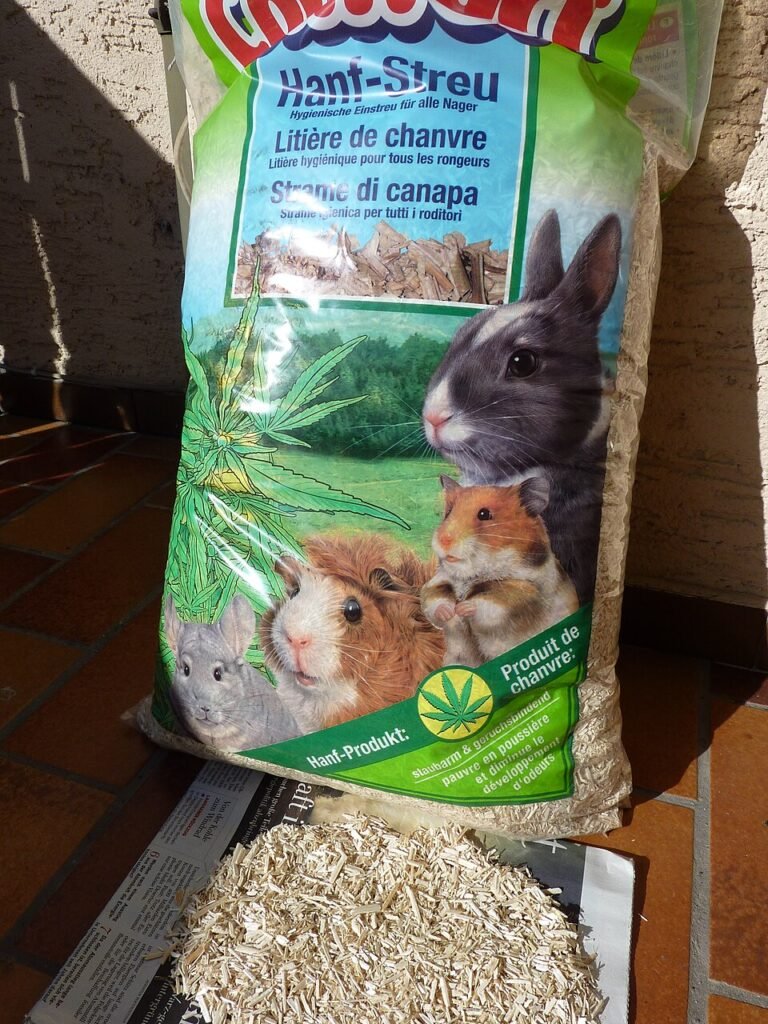
Cover photograph by Salix, CC BY-SA 3.0, via Wikimedia Commons. The contextual photograph shows a hemp bedding package marketed for rodents, alongside loose material. It is not one of the chicken-bedding offers recommended here. Original maintenance diagram by Backyard Henhouse.
