Before adding lights to a chicken coop, define the job, describe the actual location and verify the complete fixture-and-control arrangement. A light for checking an entrance is a different purchase from a supplemental-light program for laying hens. Do not assume that a dusk-to-dawn fixture belongs over the roost or that every LED accepts a timer. Write down those requirements before comparing brightness or ordering a product.
We may earn a commission when you buy through links on this page.
Name the task and the illuminated area
Start with a specific sentence: you need to see an exterior entrance during care, inspect a protected service area or implement an independently established flock-lighting plan. That description tells you what must be illuminated and when. Simply writing coop light leaves several conflicting jobs combined.
Mark the entrance, occupied compartment and roost on a simple sketch. An exterior fixture may cast light into another part of the building. The intended access area and the birds’ sleeping space should not acquire the same schedule accidentally because they happen to be nearby.
For example, imagine a caregiver wanting to see the latch outside a small building. A photocell fixture might be considered for that exterior task, but its dusk-to-dawn response does not establish that continuous overnight light is wanted inside. The plan needs a location and control decision before a model can be judged suitable.
Our chicken-coop lighting comparison separates protected service fixtures from exterior area lights and exposes model-specific restrictions. Use it after defining the task. It does not provide a universal laying program, an electrical design or evidence that one fixture works in every poultry enclosure.
Three fields to resolve before ordering a light
Keep supplemental light separate from routine visibility
University of Minnesota Extension's cold-weather guidance treats supplemental light as a management decision connected with laying and discusses the transition to darkness. This is broader than buying a lamp that lets a person see equipment during a visit.
Decide whether supplemental light is actually part of the flock’s care plan, with guidance appropriate to those birds. This article gives no age-specific schedule, daily-hours prescription or promised egg-production result. It also does not turn a care question into a reason to leave an exterior barn light on over the birds all night.
Record the established objective separately from the equipment settings. A product’s maximum brightness, default photocell behavior or selectable color is not the objective itself. If the care plan and the proposed equipment conflict, resolve the plan and product choice before installation rather than improvising around a controller’s limitations.
Describe exposure at the actual mounting position
Look beyond the words indoor/outdoor. Record whether the position is protected from rain, subject to condensation, near water equipment, dusty or affected by the cleaning routine. Then compare those conditions with the exact fixture’s instructions and the requirements for its complete installation.
The Globe Kurt manufacturer page, for example, lists dry and damp locations. Its outdoor marketing does not mean that every exposed mounting position is allowed. The exact permitted location remains part of the buying decision even if the proposed spot is under a roof.
A covered body is not proof of permission for washdown, agricultural chemicals or any hazardous dust condition. Describe the environment to the manufacturer and qualified installer rather than inferring a rating from the photograph. If the product information does not answer a relevant exposure question, leave that question unresolved until it is answered.
If adding or relocating equipment is part of a larger housing project, use the coop-format comparison to distinguish the occupied compartment from other access and service areas. A product listing’s overall building dimensions do not specify where an electrical fixture may be installed.
Treat conflicting instructions as a purchase condition
The current Sunco VT DU offer illustrates why a clear-looking product page may still need another check. Its page and specification use wet-rated language, while the current linked manual says damp locations and no direct water. Choosing the more permissive phrase does not resolve the contradiction.
The useful next step is to obtain applicable instructions and confirmation from Sunco for the delivered model and proposed location. If the conflict remains unresolved, select another documented arrangement. Do not buy first and treat the enclosure’s clips or the vapor-tight name as an independent certification.
Keep a copy of the applicable instructions with the exact model information. A later revision, similar model or retail feature bullet may contain different requirements. The purchasing record should identify which document was used, rather than merely saying that a manual exists somewhere online.
Check the exact controller with the fixture
An LED label does not establish timer, smart-switch, photocell, motion-sensor or dimmer compatibility. These are separate control arrangements. Identify the proposed device and compare it with the precise fixture instructions, not a general article about whether LEDs can be automated.
The current manual linked from the Sunco VT DU manufacturer page excludes timing devices, photo controls, occupancy sensors and third-party sensors, and states that not all dimmers are compatible. That is a reason to reject the model for a conflicting automation plan, not a minor footnote to discover after ordering.
The selected standard Lithonia FMLWL instructions also restrict electronic switching and prohibit a dimming circuit. Do not transfer the features of its ZT MVOLT variants to the standard 120V model. Give the installer the fixture code, instructions and actual control proposal together.
Compare brightness and bulb choice within the plan
Keep the published output, electrical input and color-temperature specification in separate fields. A higher lumen figure alone does not demonstrate useful illumination at the desired surface. It also does not show where unwanted light will fall or establish that a flock will produce more eggs.
The Globe Kurt needs a separately purchased bulb within the fixture’s applicable requirements. Its maximum 60W bulb rating is a limit, not a target or a poultry-lighting prescription. The decorative bulb in the product photograph is not evidence that the bulb is included, and its appearance does not establish suitability for the environment.
Integrated LED fixtures have a different service arrangement. Compare what the exact purchase includes, what the product allows and how the prescribed maintenance can be performed. Do not assume that the largest fixture, highest setting or a long retail feature list makes the complete installation more useful.
Leave a usable handover record
Before ordering, the record should identify the task, mounting area, actual exposure, exact fixture, applicable instructions, proposed control and unresolved questions. That is a concrete brief for a qualified installer. This article supplies no wiring sequence, circuit modification or method for bypassing a photocell.
After installation, retain the exact model details, applicable care instructions and a contact for questions or faults. Keep the service-light purpose clear to anyone caring for the flock. A person covering one visit should not need to guess whether a switch controls an exterior entrance, an interior compartment or another system.
Lighting also does not resolve the rest of the environment. If visibility is being added to help inspect a hot or poorly ventilated building, keep the ventilation-fan selection as a separate equipment decision. A bright room does not establish adequate fresh-air exchange, working water equipment or appropriate conditions for the birds.
Common questions
Can I add a timer to any LED light?
No. Check the exact fixture and proposed controller together. The current Sunco VT DU manual excludes timing devices and specified sensors; the selected standard FMLWL also has important switching restrictions. A selectable setting inside a fixture does not approve an unrelated external timer.
Should a dusk-to-dawn barn light illuminate the coop interior?
Do not infer an interior flock-lighting program from that feature. A photocell describes a response to surrounding light. Define the exterior access task separately and use appropriate flock-specific guidance for any supplemental light, including the transition to darkness.
What if the product page and manual disagree about wet locations?
Treat the conflict as unresolved. Obtain applicable confirmation and instructions from the manufacturer for the delivered model and proposed location before ordering or installation. If the conflict cannot be resolved, choose another documented arrangement rather than selecting the more permissive wording.
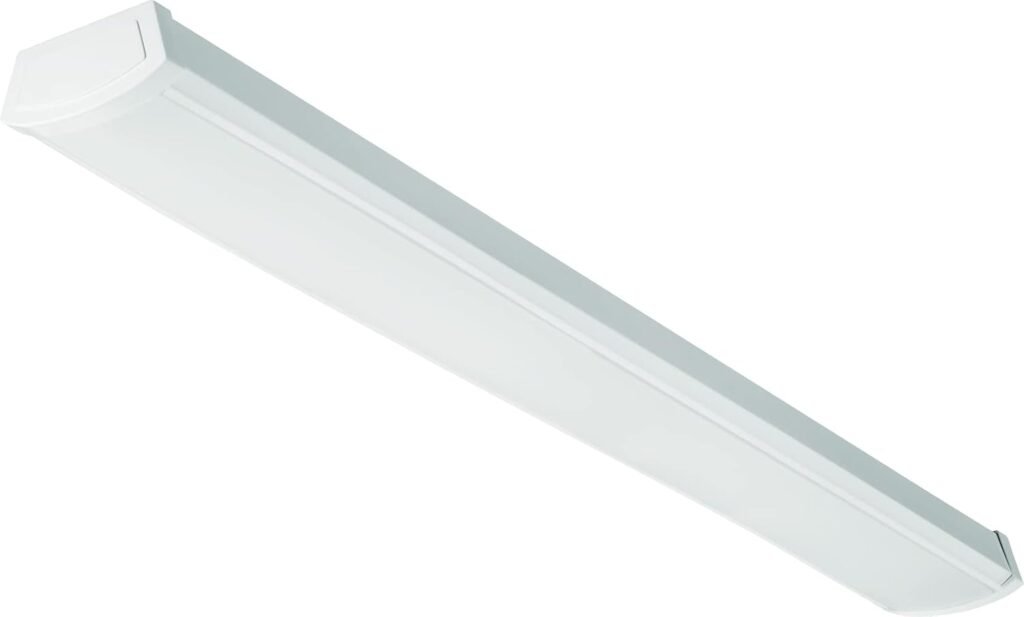
Featured product image from the exact Lithonia Lighting via Amazon listing. The fixture photograph identifies one linear service-light format, not an approved coop placement, timer combination or flock-lighting program. Original lighting worksheet by Backyard Henhouse.