Inspect a chicken run after a storm only when the severe-weather threat has ended and the area is safe to approach. Begin from outside at ground level, then check the overhead cover, supports, perimeter and closures as a connected system. Keep birds out of a damaged area until the enclosure has been appropriately repaired and checked. A quick walk around is not a structural or electrical clearance.
We may earn a commission when you buy through links on this page.
Decide whether you can approach safely
The National Weather Service’s after-thunderstorm guidance calls for continued attention to warnings, checking damage only after the threat has ended and staying out of damaged buildings. A quiet interval does not establish that the weather event is over. Follow current local instructions and any access restrictions before considering an outdoor inspection.
Look from a safe location for fallen or low-hanging wires, leaning trees, suspended branches, damaged structures and standing floodwater. The NWS guidance after a hurricane also highlights downed electrical wires and weakened structures. These hazards can remain after wind and rain stop. Do not enter the run, move debris or handle metal fencing where a wire or other electrical hazard may be involved; contact local emergency authorities or the utility.
Keep clear of sagging covers, displaced supports and anything that may fall or move unexpectedly. Do not climb onto the coop, enter a damaged building or stand beneath a loaded net to investigate. If safe access or structural condition is uncertain, the next step is qualified help, not a closer photograph. Wear appropriate clothing and sturdy footwear for any safe ground-level check.
Keep observation separate from safe reuse
Make a ground-level record of what changed
Once safe access is established, compare what you can see with the normal arrangement. Note the location and type of change: a sagging section, separated edge, displaced post, missing fixing or door that no longer closes normally. Photos from a safe position can help explain the repair request. They do not demonstrate that the structure has enough remaining capacity.
Use plain descriptions rather than guesses about the cause. “The upper edge is detached beside the gate” is more useful than “the net failed because it was too weak.” A fallen branch, shifted support or loose connection can change the arrangement in different ways. Preserve those distinctions so the appropriate person can assess the actual problem.
Do not pull on a sagging net, tension a loose line or cut a loaded component to see what happens. Releasing a part can move other parts or shed material. This guide provides no procedure for unloading covers, clearing electrical hazards, climbing a structure or repairing storm damage. Stop the observation if conditions change or a hazard becomes apparent.
Check overhead cover and supports together
From a safe ground position, look for tears, gaps, sagging, separated joins and shifted attachment points. Look at the supporting arrangement too: the net may appear intact while a post or connection has moved. Conversely, a hole in the mesh may be local while the structure still needs a separate assessment. Neither appearance settles the other question.
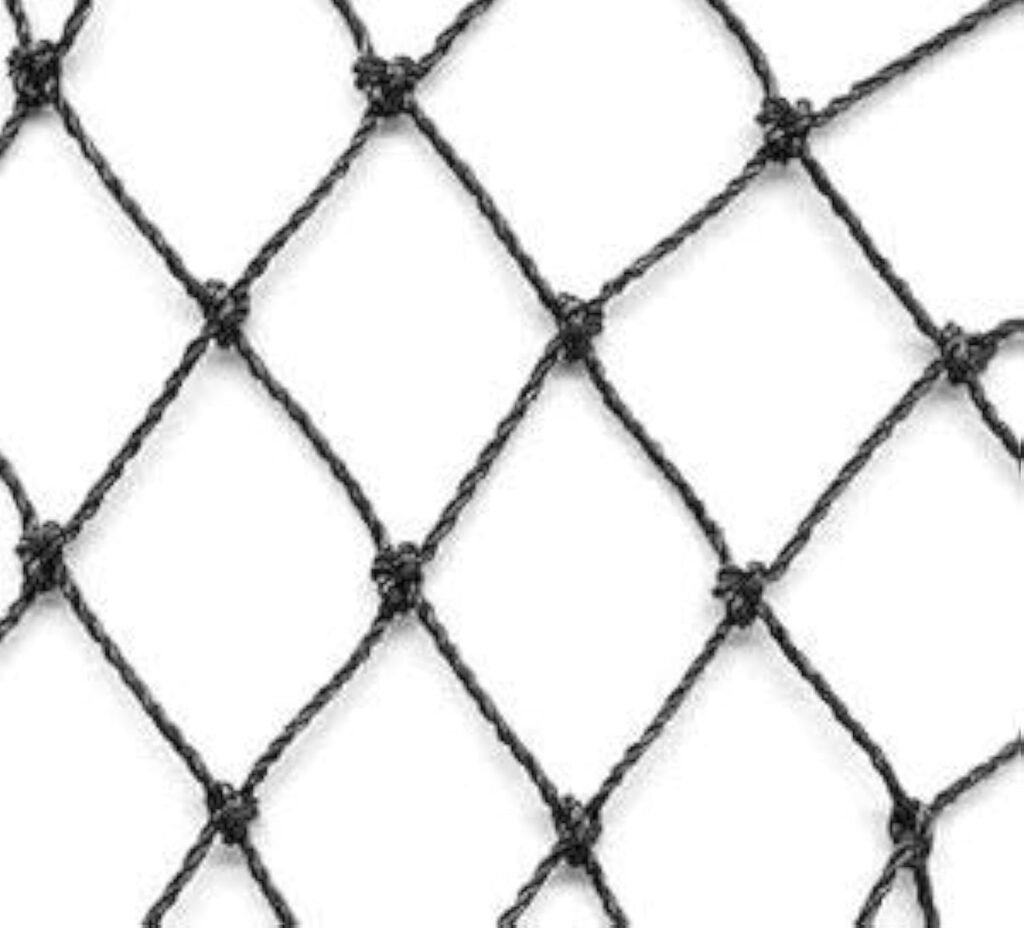
The featured close-up is a commercial poultry-net photograph, not a storm-damage image or an installation inspected by this site. Its knotted pattern illustrates the material to identify in a record. It does not verify strength, opening size or safety after an event. Avoid judging the actual run from a generic product photograph.
When the appropriate repair assessment reaches the material-selection stage, our overhead-netting selection guide explains the difference between nominal sheet size, cover path and supports. Replacing a damaged sheet with a stronger-sounding product does not establish that displaced posts or connections are suitable. A material claim is not an installed roof-load rating.
Follow the perimeter and the closures
Where safe, observe the side mesh, edges beside doors, bottom line and connections to adjacent structures. Look for openings that were not there before, displaced panels or changed ground contact. A section hidden by debris has not been checked simply because the visible wall looks normal. Record what remains obscured and arrange the appropriate assessment rather than reaching into an unsafe area.
Then check whether the door and latch operate as intended without forcing them. The coop-latch inspection guide addresses alignment and weak points as a separate check. A door that used to close but now needs lifting or pushing is a change to investigate. A closed-looking gate does not show that the latch has engaged correctly.
Predator protection depends on more than an intact top. Colorado State University Extension treats overhead covering, enclosure barriers and ground protection as different parts of the plan. After a storm, make sure a repaired overhead area does not distract from an unaddressed opening elsewhere. No single product purchase certifies the whole run.
Review weather covers and ventilation
If a tarp or other cover shifted, note where it now rests and which openings it blocks. Do not climb or reach beneath a damaged cover to reposition it. Its movement may have changed both the support loading and the airflow arrangement. Qualified assessment may be needed before either can be restored safely.
Once structural and access issues have been resolved, the weather-cover fitting guide helps distinguish intended cover placement from blocking ventilation. If repairs affect ventilation openings, review the vent-placement guide as well. These are planning checks after safe repair, not instructions to improvise an emergency seal around a damaged coop.
Keep feed, water and equipment in the inspection record too. Note visible contamination, displaced containers or damage for an appropriate follow-up. This article does not establish that storm-exposed feed or water is safe, prescribe a disinfectant or provide a disease-control protocol. Obtain suitable guidance where those questions arise rather than infer safety from appearance.
Decide what must happen before reuse
Separate observations from completed work. A useful record has a location, the observed problem, the responsible person and the confirmation that the appropriate repair and check have been completed. Mark uncertainty explicitly. “Could not inspect the corner beneath hanging debris” is a reason to keep it unresolved, not a reason to assume that corner is acceptable.
For a hypothetical case, replacing a torn overhead sheet completes one item while a shifted gate post remains open in the record. The run is not ready merely because the newest net looks tidy. The same applies if the mesh is repaired but electrical clearance, support condition or a blocked exit is still unresolved. Keep the actual enclosure decision tied to the remaining issues.
Keep birds out of the damaged area until the necessary work is appropriately completed, and arrange suitable temporary housing with competent help if needed. Do not enter a dangerous area for a rescue or repair attempt. Seek emergency or veterinary help as appropriate for hazards or injured birds. Reopening depends on a safe, functional enclosure, not on finishing a shopping list.
Common questions
Can I inspect the run as soon as the rain stops?
Only after the severe-weather threat has ended and safe access is established under current local guidance. Watch for downed wires, unstable structures, suspended debris and floodwater. Stay out when those hazards or uncertainty remain.
Should I pull a sagging net tight or cut off a loaded section?
Do not use this guide as a repair procedure. Keep clear of loaded or damaged overhead components and get appropriate qualified help. Changing a tensioned or loaded part can move other parts or shed material.
Does a new net mean the run is ready for the birds?
No. Supports, connections, perimeter openings, doors and other unresolved hazards need their own checks. Keep birds out of the damaged area until the necessary repairs and appropriate assessments are completed.
Featured product image from the exact Excursions via Amazon listing. This commercial close-up illustrates knotted netting only. It is not a photograph of storm damage, our installation or a structural assessment, and it supplies no scale reference.