Choose a chicken leg band for the individual bird, the exact band design and a monitoring routine you can maintain. Check fit after application and as the bird changes; a breed label, nominal size or adjustable closure does not establish a permanent fit. If a band is tight, embedded or associated with injury, get prompt veterinary help rather than forcing it or improvising a removal procedure.
We may earn a commission when you buy through links on this page.
Identify the band before deciding on size
Poultry identification bands come in different constructions. A spiral ring, an adjustable numbered band and a closed ring do not use the same fitting or replacement method. Start with the exact maker, model and supplied instructions. A generic listing that resembles another brand does not inherit that brand’s size chart or method of application.
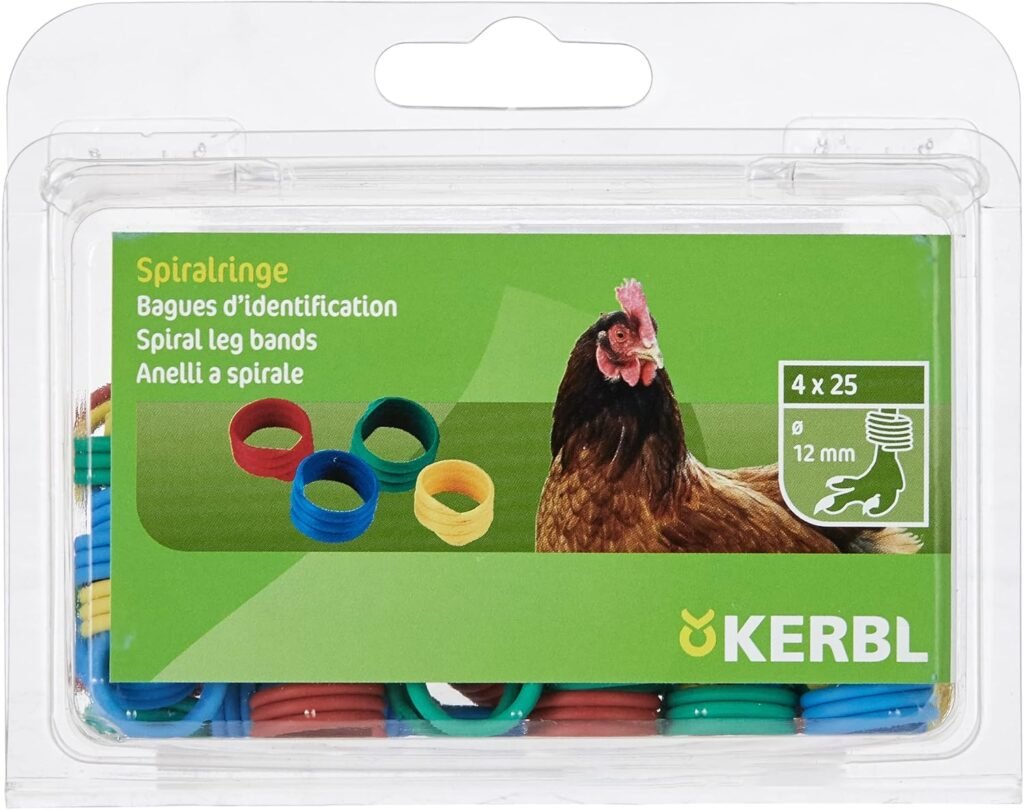
The featured package is one documented example, not the recommended size for every chicken. Kerbl identifies item 72315 as a 12-millimeter plastic spiral ring in a mixed pack of 100, with red, green, blue and yellow. Those details let you match the offer to the package. The diameter and count do not demonstrate that it fits a particular leg.
Adjustable designs also need a fit decision. The Chicken Hill ZBand instructions warn that use on growing birds requires close attention and replacement before the band becomes tight. Read that qualification alongside the maker’s broad size marketing. Adjustable means the design can be set; it does not mean it adjusts itself as a bird grows.
Keep identity and fit in the same record
Plan who will check the bird
Before applying bands, decide who can handle the birds appropriately, inspect the actual fit and arrange replacement when needed. If no one can do that reliably, postpone the banding decision and get competent help. Identification should support the flock record rather than create equipment that no one is responsible for checking.
Iowa State University Extension’s poultry project tips explicitly warn that undersized bands injure birds and call for weekly fit checks in young birds that are still growing. Treat that warning as a reason for active monitoring, not permission to ignore a concern between calendar checks. Follow the current product directions and professional advice for the individual bird.
The record can be simple: bird identity, band type, nominal size, date applied and the person responsible. Add the check date and any change. A color code without a written explanation becomes hard to interpret when another person cares for the flock. Do not assume an old note about the original fit establishes the current fit.
Check the actual fit and condition
Use the maker’s directions for the exact design and have an experienced poultry handler demonstrate the process if you are unfamiliar with it. This guide supplies no universal finger-gap rule, plier technique or method of restraining a bird. The handling and application method must suit the bird and band rather than be improvised from a photograph.
Look at the band and the leg, not just whether the number is readable. Confirm that the fitted arrangement meets the applicable instructions and does not press into the leg. Also look for damage, rough or broken parts, trapped material and changes in the surrounding skin. A label saying suitable for chickens does not eliminate those checks.
A visible problem is not a reason to keep manipulating the band until it looks better. Stop routine fitting or inspection if it is causing distress or you cannot assess it safely. A tight or embedded band, swelling, a wound or difficulty using the leg needs prompt veterinary assessment. Do not force a band over a joint, pull on an injured leg or cut close to the skin as a do-it-yourself remedy.
Allow for growth and replacement
The first successful fit is only the starting point. A growing bird may need a different size, and a non-growing bird can still develop a fit or equipment problem. “Permanent identification” describes the intended record, not a promise that a physical band can be left unchecked for life. A spare pack in a drawer does not help unless someone notices when replacement is needed.
Use the replacement method for that band and preserve the identity record. Record the old identifier, the new identifier and when the change occurred. If a number is unreadable or the identity is uncertain, mark that uncertainty instead of assigning the old history to whichever bird looks similar. The objective is an accurate link between the bird and the record.
For a hypothetical flock with repeated colors, a red band alone may identify a group but not one individual. The combination of a number and a recorded color can answer a different question. This is an organizational example, not a recommendation to put multiple bands on a leg or reuse a particular numbering system for a show.
Review the environment as part of the check
The band should not become a reason to overlook equipment around the bird. Look for damaged mesh ends, loose connections and awkward gaps during normal maintenance. If you are replacing enclosure material, the hardware-cloth comparison covers that separate purchase. A tighter mesh specification is not evidence that an entire enclosure is free of snagging points.
Check the areas where birds perch and move between levels as well. The roosting-bar comparison addresses the equipment choice, while the actual fit and condition of an identification band remain individual checks. Avoid attaching the band to anything in the environment or treating it as a restraint point.
New activity equipment adds connections that need inspection. Our chicken-toy comparison distinguishes hanging, ground and climbing formats and their maintenance demands. Clear access and intact equipment matter independently of whether a particular bird wears a band. None of those purchases removes the need to check the bird itself.
Keep the scope of identification clear
A band can link a bird to a written observation. It does not establish health, vaccination status, parentage or eligibility for an exhibition unless the underlying verified record does so. If a show or program requires particular identification, obtain its current rules before buying; a colorful household pack is not automatically accepted.
Likewise, a band’s material or advertised durability is not a welfare guarantee. Choose the exact product and size with appropriate help, keep a responsible person and monitoring record, and replace the arrangement when needed. If the individual fit cannot be established or maintained, a broad size claim should never be the deciding argument for leaving it on.
Common questions
Does a 12-millimeter band fit every chicken?
No. It identifies one nominal product size. The individual leg, band design and current maker instructions determine suitability. The Kerbl package shown illustrates how to identify an offer, not a universal size recommendation.
Do adjustable bands grow with the bird?
Do not assume they do. Follow the exact directions, monitor growing birds and arrange replacement before a band becomes tight. The ability to set a closure is not proof of automatic adjustment or a permanent fit.
What if the band is embedded or the leg is swollen?
Get prompt veterinary help. Do not force the band, pull it over a joint or attempt cutting near the skin as an improvised remedy. Stop routine fitting when the bird is distressed or the fit cannot be assessed safely.
Featured product image from the exact Kerbl via Amazon listing. This exact listing image identifies a nominal 12-millimeter Kerbl package. It does not show fit on a bird or recommend that diameter for your flock.