The Premier 1 All-Season is our first pick for adult chickens already using nipples: its quick-fill cap and 16 ft detachable cord make a sheltered winter station easier to manage. Choose the smaller Farm Innovators HB-60P if you prefer a 2-gallon bucket, or the API HPW33 if your hens need a familiar open drinking rim. Start with the drinking method, refill routine and installation requirements. All five picks need electricity, and several manuals restrict placement to dry, sheltered areas.
We may earn a commission when you buy through links on this page.
Our picks at a glance
Start with the features that fit your setup.
Best for winter top-ups without removing the lid
Premier 1 All-Season Heated Poultry Waterer

A small fill hatch and a detachable 16 ft cord suit a sheltered, powered station.
- Water capacity
- 3 US gal
- Heater
- 100 W
Best for a smaller top-fill bucket
Farm Innovators HB-60P
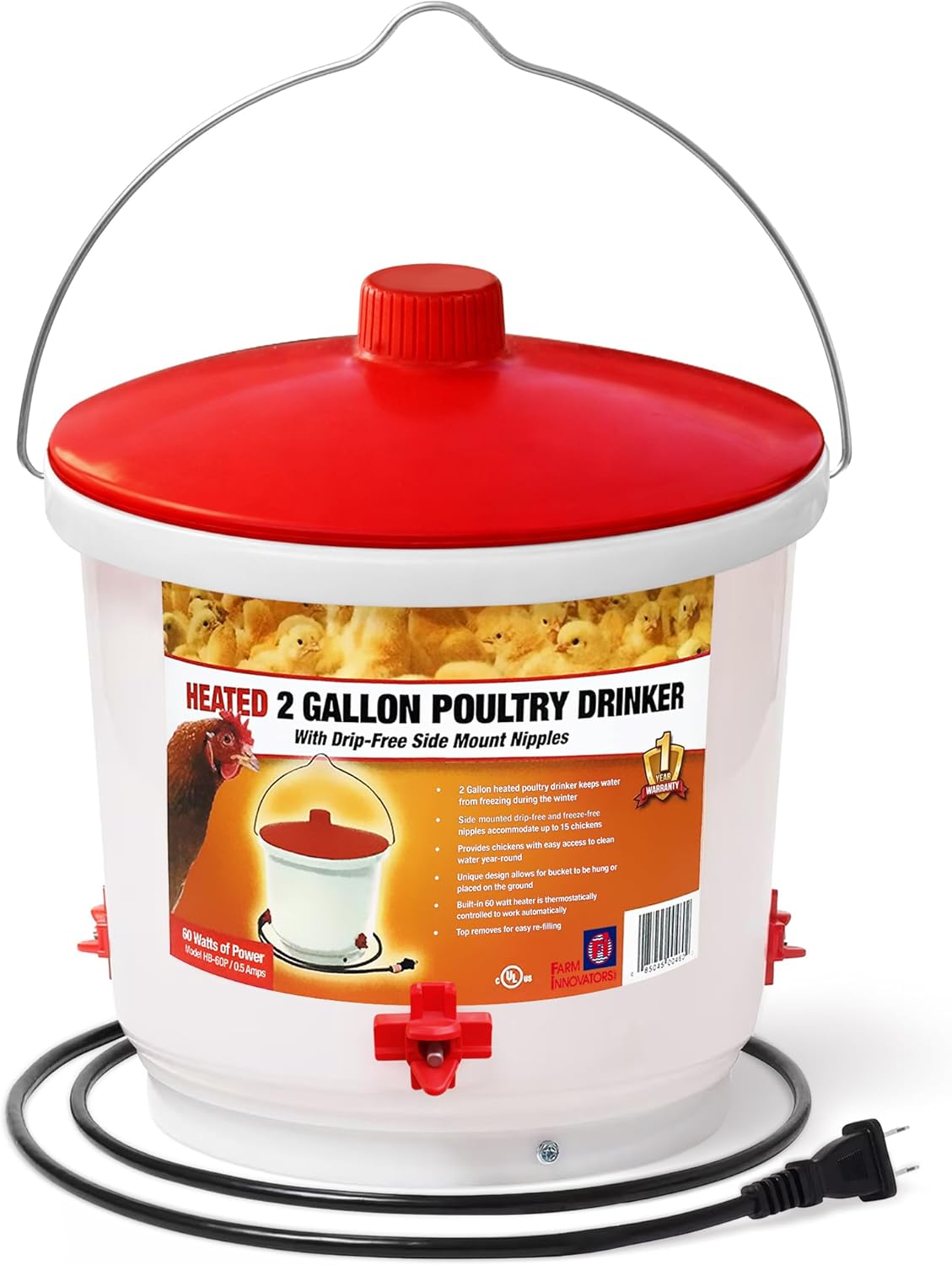
A 2-gallon nipple bucket with a removable top and a 60 W thermostat-controlled heater.
- Water capacity
- 2 US gal
- Heater
- 60 W
Also in this guide
- API Deluxe Heated Hen Hydrator HDHH3Best for four nipple access points
- API Heated Poultry Waterer HPW33Best single open-rim option for a dry indoor station
- Farm Innovators HPF-100 Two-PackBest for two separate open-rim stations
Heated chicken waterers compared
| Product | Water capacity | Rated heater power | Drinking access | Refilling |
|---|---|---|---|---|
| Premier 1 All-Season Heated Poultry Waterer | 3 US gal | 100 W | 3 recessed nipples | Hinged quick-fill cap |
| Farm Innovators HB-60P | 2 US gal | 60 W | Side-mounted nipples | Removable top |
| API Deluxe Heated Hen Hydrator HDHH3 | 3 US gal | 65 W | 4 side-mounted nipples | Twist-lock top |
| API Heated Poultry Waterer HPW33 | 3 US gal | 100 W | Open drinking rim | Bottom plug; turn unit over |
| Farm Innovators HPF-100 Two-Pack | 2 × 3 US gal | 100 W per unit | Open drinking rims | Bottom plug; turn each unit over |
Five heated chicken waterers
01 / Best for winter top-ups without removing the lid
Premier 1 All-Season Heated Poultry Waterer
Best for: Adult chickens already using nipples, with a sheltered spot within reach of a proper outlet.
- Water capacity
- 3 US gal
- Heater
- 100 W
Why consider it
- Quick-fill cap avoids removing the whole lid for top-ups
- Detachable 16 ft cord
- Three spare nipples listed with the unit
Keep in mind
- Manual requires protection from snow, rain and wind
- Nipple access must be checked even with liquid in the bucket
- Main lid still needs removal for thorough cleaning
Read the full analysis of Premier 1 All-Season Heated Poultry Waterer
The Premier 1 All-Season combines a 3-gallon bucket, three recessed nipples and a small hinged fill cap. That cap matters when a cold lid is difficult to remove: you can top up through the opening. You still need to take the main lid off for cleaning and to inspect the inside.
Its 16 ft cord detaches for warm-weather storage. Follow the 530022 manual: it requires a GFCI-protected outlet, direct connection without an extension cord, and a coop or shed protected from snow and rain. It also warns that wind can freeze the nipples. The longer cord helps with placement only if the whole installation meets those conditions.
This is our first choice for convenient winter refilling when the flock already understands nipples. Check each drinking pin during cold rounds, and keep a separate water source ready for a power failure. A bucket of liquid water does not prove the birds can get a drink.
Key specs: Model 530022; 3 US gallons; 100 W, 120 V AC per manual; three recessed nipples; 16 ft detachable cord.
02 / Best for a smaller top-fill bucket
Farm Innovators HB-60P
Best for: A keeper who prefers smaller refills and can check the water level frequently.
- Water capacity
- 2 US gal
- Heater
- 60 W
Why consider it
- Upright filling through a removable top
- Smaller full-water load than a 3-gallon bucket
- Manufacturer permits hanging or hard, flat support
Keep in mind
- Less water reserve than the 3-gallon picks
- Outer nipple recess is not heated
- Needs water present whenever the heater operates
Read the full analysis of Farm Innovators HB-60P
The HB-60P has a 2-gallon reservoir and a 60 W heater. The removable top lets you refill upright. It can hang or stand on a hard, flat surface, provided the nipples are accessible and the unit is protected from wind. The smaller tank is useful if lifting a full 3-gallon waterer is awkward.
The HB-60P instructions distinguish the working nipple mechanism from the red outer recess. The recess itself is not heated, so a little visible ice there does not automatically mean the heater has failed. Press each pin and confirm actual flow. The instructions also prohibit operation without water.
Choose it for the refill routine and size. Its lower wattage is a nameplate figure, not proof of lower winter electricity consumption than a larger thermostatic unit. The 2-gallon tank gives less reserve, so establish how quickly your own flock empties it before relying on a refill interval.
Key specs: HB-60P; 2 US gallons; 60 W, 120 V AC; thermostat-controlled heater; side-mounted nipples.

03 / Best for four nipple access points
API Deluxe Heated Hen Hydrator HDHH3
Best for: Adult chickens using a hanging nipple bucket in a dry area with a nearby outlet.
- Water capacity
- 3 US gal
- Heater
- 65 W
Why consider it
- Four separate nipple drinking points
- Twist-lock top allows upright filling
- Carrying grip on the hanging handle
Keep in mind
- 6 ft cord gives less placement flexibility than the Premier
- Minimum water line must stay covered during operation
- Manufacturer recommends the unit for adult birds
Read the full analysis of API Deluxe Heated Hen Hydrator HDHH3
The HDHH3 offers four side-mounted nipples on a 3-gallon bucket. Miller lists a 65 W heater and a 6 ft cord. The handle has a carrying grip, and the sloping twist-lock lid keeps the top closed while the waterer hangs. Check the HDHH3 model code when ordering; the similar unheated bucket is a different product.
The heated model’s manual calls for a dry location, a GFCI outlet and unplugging before refilling. It also has a minimum water line: refill or unplug before the level falls below it. That limit matters more than how much water appears to remain at the very bottom.
Four drinking points give an extra place to reach water compared with the Premier’s three. They do not establish a safe flock-size rating or mean all birds will use the station freely. Watch access after hanging it, especially where several hens approach from the same side, and confirm every pin delivers water.
Key specs: HDHH3; 3 US gallons; 65 W, 120 V; four side nipples; 6 ft cord; twist-lock lid.
04 / Best single open-rim option for a dry indoor station
API Heated Poultry Waterer HPW33
Best for: A flock using open water, when you can safely turn a full fount upright and provide a dry indoor location.
- Water capacity
- 3 US gal
- Heater
- 100 W
Why consider it
- Open rim suits birds already drinking from a fount
- Complete reservoir and heater in one unit
- Manufacturer documents the reservoir’s open and closed positions
Keep in mind
- Manual limits use to a dry indoor area
- Full unit has to be turned over after filling
- Open drinking rim needs frequent checks for debris
Read the full analysis of API Heated Poultry Waterer HPW33
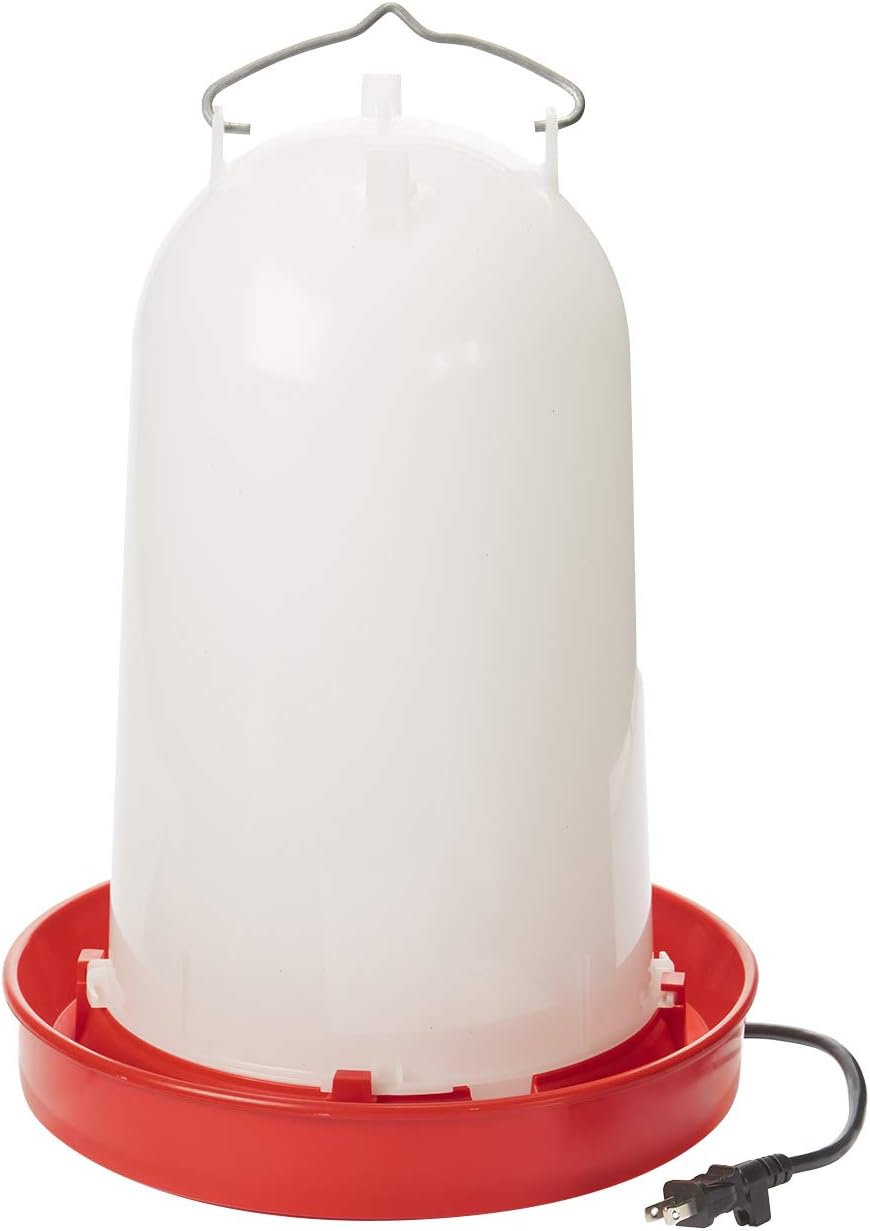
Miller’s HPW33 pairs a 3-gallon reservoir with a 100 W heater and an open drinking rim. It avoids introducing nipple training during freezing weather. The tradeoff is that the exposed rim needs inspection for litter and fouling, and refilling requires turning the whole unit over.
Read the HPW33 operating sequence before filling: close the water passage, invert the assembled unit, fill through the rubber-stopper opening, secure the stopper and return it upright. Open the passage again as instructed. Unplug for filling, never immerse the heated base, and use it only in a dry indoor area on a hard, flat, level surface.
The exact Amazon listing specifies a 4 ft cord. Measure the distance to the intended outlet before choosing a station. This is a reasonable single-fount choice when familiar drinking access matters and you can handle the bottom-fill routine; it is a poor match for an exposed run or someone who needs easy upright top-ups.
Key specs: HPW33; 3 US gallons; 100 W, 120 V, 60 Hz; open rim; bottom-fill stopper; 4 ft cord per linked listing.

05 / Best for two separate open-rim stations
Farm Innovators HPF-100 Two-Pack
Best for: A keeper who needs two open-water stations and can provide compliant power and dry indoor shelter for both.
- Water capacity
- 2 × 3 US gal
- Heater
- 100 W per unit
Why consider it
- Two complete founts in the linked offer
- Two suitable indoor locations can distribute drinking access
- Open rims avoid a switch to nipple drinking
Keep in mind
- Both units need dry indoor shelter and separate cleaning
- 100 W rating applies to each fount
- Captured offer does not establish adjustable legs are included
Read the full analysis of Farm Innovators HPF-100 Two-Pack
This linked offer is a two-pack of the HPF-100. Each fount holds 3 gallons and has a 100 W heater. It gives you two separate drinking locations, not one 6-gallon tank. Two units running their heaters at once represent 200 W of rated load.
The HPF-100 manual requires a dry indoor, sheltered area protected from wind, despite the outdoor wording in the listing title. Filling uses a bottom stopper while the unit is inverted. The manual has a specific grounded 16/3 AWG extension connection arrangement and GFCI requirement; follow those instructions for the supplied unit rather than applying another model’s cord rules.
Buy the pack only if a second complete fount serves a real purpose. You still have to empty, wash and refill each reservoir, and both need suitable electrical placement. The captured listing photo shows the two founts without adjustable legs, so we do not treat the folding-leg feature on the current manufacturer page as included in this offer.
Key specs: Two HPF-100 founts; 3 US gallons and 100 W per unit; 120 V AC; thermostat control; bottom filling.
How we chose
We compared five complete heated poultry-waterer designs, checking the exact Amazon offer against manufacturer specifications and instructions. We looked at usable drinking access, how you add water, capacity, rated power and installation restrictions. The HPF-100 offer is a two-pack, counted as one design. We excluded heater bases that need a separate compatible fount, pet bowls, birdbath heaters and insulated buckets without an electric heater.
These recommendations compare documented features and daily tasks. We have not run a freeze chamber test, measured electricity use or verified a lowest working temperature. Manufacturer temperature claims use conditions that may differ from your coop. Our recommendations therefore emphasize shelter, an appropriate outlet and checking the drinking point itself.
Owner discussions helped identify practical questions. In a BackYardChickens thread about filling a heated fount, several keepers describe difficulty with the bottom-fill routine. That supports practicing the sequence before a freeze; it does not establish a failure rate. We use the manufacturer’s directions for the actual filling steps.
How to choose a heated chicken waterer
Choose the drinking method before the tank size
An open rim lets a hen drink from a shallow trough. Nipples require her to activate a small pin. A familiar drinking method is useful when you need to replace a failed waterer immediately. If you want to change methods, introduce the new waterer while you can watch the flock use it and provide reliable water access during the transition.
Nipples reduce the open area where litter can fall into drinking water, but they introduce another check: does water flow when each pin is pressed? An exposed rim gives a direct view of the drinking surface, but you need to clear debris and wash it. Neither design removes the daily water round. Choose the one whose cleaning and flow checks you can carry out consistently.
Plan where the electricity and shelter meet
Read the installation instructions before deciding that a convenient corner of the run will work. The HPW33 manual specifies a dry indoor location. The HPF-100 is also an indoor product and requires dry shelter and wind protection. Premier’s manual describes a coop or shed protected from rain and snow; the HDHH3 manual calls for a dry area. The HB-60P is described as an outdoor product, with wind protection still required.
Cord guidance also differs. Premier’s manual requires its supplied cord directly into an outlet and prohibits an extension, even though the sales page includes extension advice. The HPF-100 manual specifies a particular grounded extension arrangement. Use the current instructions supplied with your exact model. Ask the manufacturer about conflicting directions and a qualified electrician about the circuit or outlet. A longer cord cannot make a wet or exposed installation suitable.
Compare refill work with the water load
Two US gallons of water weigh about 16.7 lb; three weigh about 25 lb, before adding the container. These are approximate water-only weights. A carry handle can help you lift a bucket, but it cannot remove the work of carrying it across a slippery yard or turning a filled fount upright.
The Premier’s hatch is useful for small top-ups. The HB-60P and HDHH3 let you refill through the top. The HPW33 and HPF-100 use bottom openings with the unit inverted. If you have trouble lifting or rotating a 25 lb load, prioritize an upright filling arrangement and a safe way to bring water to it. Keep the electrical parts dry and follow the model’s unplugging and filling instructions.
Treat capacity as a reserve you measure at home
Tank volume does not tell you how many days a flock can be left alone. Intake varies, and spillage, leaks or an iced drinking point can interrupt access while the reservoir still contains water. University of Minnesota Extension calls for continuous access to fresh, clean water in cold weather.
For a practical refill record, note the starting level and how much you add at the same time each day. Suppose you add 0.6 gallon in a day: that describes what left this station, including any loss. It does not prove every bird drank enough. Check for wet bedding, leaking pins and birds waiting to drink before using the number to plan your rounds. Keep water above any minimum line in the instructions.
Use wattage for load planning, then measure consumption
The comparison lists rated heater power. A thermostat switches a heater according to temperature, so the listed watts do not tell you the exact daily electricity use. The HB-60P is rated at 60 W, the HDHH3 at 65 W, and the other individual units at 100 W. Two 100 W HPF-100 founts can draw 200 W together while both heaters are on.
For an upper-bound example of heater energy, 100 W running continuously for 24 hours uses 2.4 kWh. A 60 W heater running continuously uses 1.44 kWh. Actual thermostatic operation may use less; do not turn those examples into a monthly bill without measured run time and your electricity rate. Lower wattage alone also says nothing about performance in your particular station.
Set up a winter water station you can inspect
Read, fill and check before the first freezing night
Identify the model code on the unit, read its manual and confirm the supply voltage. These are US-market products using 120 V AC instructions. Inspect the cord and plug for damage, arrange the required outlet and provide the stated shelter. Where a manual requires GFCI protection, confirm it is present; do not assume a covered socket provides that protection.
Practice refilling with the waterer disconnected from power. On a bottom-fill fount, learn which parts stay assembled, how the stopper seals and which position opens water flow. Set it down and check for leakage before putting it into service. On a nipple bucket, press every pin and watch for water. Cleaning access is a separate check from whether the small refill hatch opens easily.
Check access, water level and flow on each round
Walk the route the hens use to reach the station. Snow, a closed passage or crowding can make a functioning waterer inaccessible. Watch birds drink after changing the station’s position or height. With a hanging bucket, secure the support and route the cord as the manual directs so it cannot be stepped on or pecked.
During freezing weather, inspect the actual drinking point as well as the reservoir. The Premier manual specifically warns about wind freezing nipples. Farm Innovators notes that the HB-60P’s outer nipple recess is unheated. Confirm water comes out instead of diagnosing the whole system from a glance at a display, the feel of the bucket or a small patch of ice. If access fails, provide fresh water while you follow the model’s troubleshooting instructions.
Keep cleaning and outage plans simple
Heat does not keep drinking water clean. Disconnect power before the filling or cleaning steps that require it, empty the waterer and clean the accessible water-contact surfaces according to its instructions. The HPW33 manual prohibits immersing the heated base, and the HDHH3 manual prohibits immersion of the product. Do not dunk an electrical waterer simply because its reservoir is washable.
Have a second ordinary water container ready if power is lost or the heated unit must come out of service. Bring fresh water and check it frequently enough to keep it available as conditions change. Insulation can slow cooling, but none of these picks has a documented battery backup. A two-pack supplies another waterer; it does not protect either one from a shared power outage.
FAQ
What is the best heated waterer for a small backyard flock?
For adult hens already using nipples, start with the Premier 1 All-Season if its sheltered installation requirements fit your site. The HB-60P is a smaller alternative for someone who prefers 2-gallon fills. If the flock needs an open rim, the HPW33 is a single-fount option for a dry indoor station.
Can a heated chicken waterer stay outside in rain and snow?
Only if the exact model’s instructions permit that exposure. Several picks here require dry shelter, and both the HPW33 and HPF-100 manuals specify indoor use. The word “outdoor” in a listing title does not override a manufacturer’s installation restriction. Check the manual before buying for an exposed run.
Why is the water liquid but the nipples will not work?
Check each pin for flow, the station’s wind exposure and the model’s troubleshooting instructions. Premier warns that wind can freeze nipples. A reservoir that remains liquid does not establish that every outlet works. Provide another dependable water source while resolving the problem.
Can I use an extension cord with these waterers?
The answer depends on the model. Premier’s manual prohibits an extension cord; the HPF-100 manual specifies a grounded 16/3 AWG extension arrangement. Do not transfer one product’s directions to another. Follow the supplied instructions and have a qualified electrician resolve outlet or circuit questions.
Do heated chicken waterers use 100 watts all day?
The 100 W figure is rated heater power. Thermostatic units cycle according to conditions, so total daily energy depends on how long the heater operates. Continuous 100 W operation for 24 hours would use 2.4 kWh. Use measured consumption to estimate a bill.
Will a heated waterer keep the coop warm?
These products are intended to keep drinking water available during freezing weather. Their rated heater power is not a space-heating specification. Plan the water station around reliable access, proper electrical installation and the manufacturer’s temperature and placement limitations.
Which heated waterer should you buy?
Choose the Premier for sheltered nipple drinking and easier top-ups, the HB-60P for a smaller bucket, or the HDHH3 for four nipple access points. Choose the HPW33 when a familiar open rim matters and you have a dry indoor station. The HPF-100 two-pack makes sense only when you need two separate open-water locations and can power and maintain both.
Cover photograph by Addshore, CC BY 3.0, via Wikimedia Commons.
