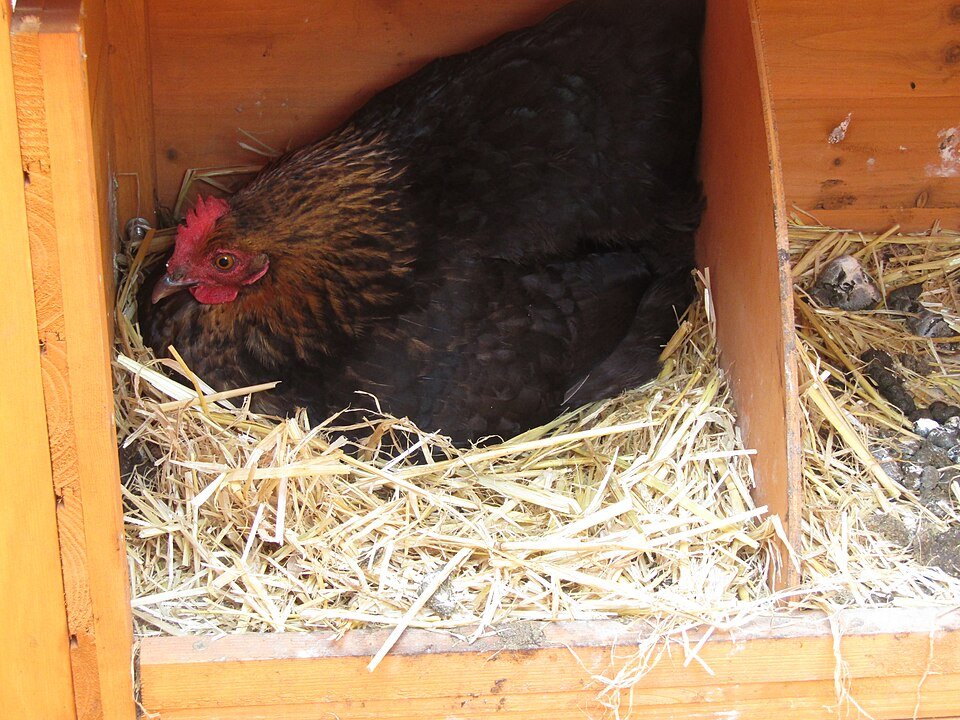
For a simple conventional nest, start with the Little Giant Single Plastic Nesting Box and add the number of units your flock needs. Choose the Homestead Essentials Classic three-compartment unit if you want removable front roll-away trays and your hens fit its smaller-bird design. The Brower 406B gives a larger setup six traditional nests in one bank. Before choosing any of them, check the usable nesting space, the hens’ route inside and your route for collecting eggs and cleaning.
We may earn a commission when you buy through links on this page.
Our picks at a glance
Start with the features that fit your setup.
Best simple single wall-mounted nest
Little Giant Single Plastic Nesting Box

A molded plastic nest with an entrance perch and a lowered floor to retain bedding.
- Nests
- 1 enclosed nest
- Collection
- Reach-in
Best for removable forward roll-away trays
Homestead Essentials Classic 3-Compartment Nest

Three slide-out trays move eggs toward separate front lids; check the Classic perch against hen size.
- Nests
- 3 divided nests
- Collection
- Forward roll-away; individual lids
Also in this guide
- Brower 406B Six-Hole NestBest conventional metal bank for a larger setup
- PETSFIT Four-Hole Wooden Nesting BoxWooden row for smaller hens after a fit check
- VEVOR CNB-04-Leg Four-Compartment NestNarrow-bay roll-away option with included legs
Chicken nesting boxes compared
| Product | Nest layout | Egg collection | Materials | Installation |
|---|---|---|---|---|
| Little Giant Single Plastic Nesting Box | 1 enclosed nest | Reach-in | Polyethylene | Wall mount; slide-type screw holes |
| Homestead Essentials Classic 3-Compartment Nest | 3 divided nests | Forward roll-away; individual lids | Galvanized steel and PP trays | Sturdy wall; stand is an accessory |
| Brower 406B Six-Hole Nest | 6 nests in 2 tiers | Reach-in | Galvanized steel; wood perches | Hanger brackets; allow perch projection |
| PETSFIT Four-Hole Wooden Nesting Box | 4 divided nests | Reach-in | Fir wood; PVC roof | Wall mount or floor placement |
| VEVOR CNB-04-Leg Four-Compartment Nest | 4 divided nests | Forward roll-away; covered trays | Galvanized steel and PP | Included legs or wall mounting |
Five chicken nesting boxes
01 / Best simple single wall-mounted nest
Little Giant Single Plastic Nesting Box
Best for: Adding individual conventional nests to a sound coop wall, with room to reach inside for eggs and cleaning.
- Nests
- 1 enclosed nest
- Collection
- Reach-in
Why consider it
- Lowered floor helps keep nesting material inside
- Separate units let you choose the arrangement
- Entrance perch and wall-mount slots are built in
Keep in mind
- Egg collection requires reaching into the nest
- No removable roll-away basket
- Published outside dimensions do not establish usable floor area
Read the full analysis of Little Giant Single Plastic Nesting Box
The Little Giant 163620 is a straightforward enclosed nest: a molded polyethylene body, an entrance perch, ventilation holes and a floor below the doorway. You collect eggs by reaching through the entrance. There is no sloped roll-away floor or separate collection chamber to set up.
Miller gives the outside dimensions as 16.5 × 15.88 × 19.75 inches and describes mounting on 16-inch-on-center studs. Those are installation dimensions, not the usable nest-floor size. The current Amazon overview gives a conflicting length; use the manufacturer’s dimensions for planning and confirm the supplied unit before drilling or cutting.
It is the easiest starting point here if you want to add nests one at a time and keep the bedding routine familiar. Leave enough room in front to see the floor and remove the bedding. The closed body is easy to wipe, but cleaning still means reaching inside rather than pulling a basket out.
Key specs: 163620; one polyethylene nest; 16.5 × 15.88 × 19.75 in overall per manufacturer; conventional reach-in collection; wall mounting.
02 / Best for removable forward roll-away trays
Homestead Essentials Classic 3-Compartment Nest
Best for: A small-to-medium-hen flock moving to front egg collection, with room to remove each tray for washing.
- Nests
- 3 divided nests
- Collection
- Forward roll-away; individual lids
Why consider it
- Individual trays remove for washing
- Separate front lids give access to each collection area
- Manufacturer supplies illustrated assembly and transition directions
Keep in mind
- Classic is not the maker’s preferred style for heavier hens
- Tray removal needs clear space in front
- Freestanding stand is a separate accessory
Read the full analysis of Homestead Essentials Classic 3-Compartment Nest
The HEPS2008 Classic has three divided nests, each with a removable polypropylene tray and its own collection lid. The trays slope forward. The lid handle also serves as the entry perch, so the same front area is part of both the birds’ approach and your collection route.
Check the Classic version carefully if you keep heavy hens. Some listing language says medium to large, but the manufacturer’s style chart calls Classic best for small-to-medium hens and recommends other styles for heavier birds. We would follow that more specific limitation and confirm the actual floor and entrance clearance before ordering.
The three-compartment instructions show the basket stops, tray positions and mounting to a sturdy wall. The linked listing gives 31.5 × 20.5 × 20 inches overall. Allow extra front space to pull the trays out, and do not assume a freestanding support is included just because a compatible stand is sold separately.
Key specs: HEPS2008 Classic; three divided nests; galvanized panels with PP trays and lids; front roll-away collection; 31.5 × 20.5 × 20 in overall in linked listing.

03 / Best conventional metal bank for a larger setup
Brower 406B Six-Hole Nest
Best for: A keeper who needs several conventional nests together and has the wall space and support for a two-tier metal unit.
- Nests
- 6 nests in 2 tiers
- Collection
- Reach-in
Why consider it
- Six distinct nests in one two-tier assembly
- Removable bottoms for litter changes
- Perches fold up to close nest access
Keep in mind
- Large projection once the perches are included
- Assembly involves numerous fasteners and sharp-edge precautions
- Eggs remain in the nests until you collect them
Read the full analysis of Brower 406B Six-Hole Nest
The Brower 406B holds six separate nests in two tiers. Eggs stay in the bedded nests for reach-in collection. Removable metal bottoms let you replace litter and clean individual spaces, while the front perches fold up when you need to close access.
Plan from the manufacturer’s catalog, which gives a 36¾-inch length and up to 24½ inches of depth including the lower perch. The back is 34½ inches high before the hanger brackets add ⅝ inch. The catalog lists entrances 11 inches wide by 7½ inches high; those opening measurements are separate from the bottom-panel sizes.
This is a lot of equipment for a very small flock. Choose it because you want six usable nest locations in one bank, after checking access for your hens. The 406B instructions call for tools and warn about sharp edges during assembly and moving. The manufacturer’s advertised hen count does not replace an independent check of nest provision, housing space or flock behavior.
Key specs: 406B; six nests in two tiers; galvanized steel with wood perch boards; 36¾ in long; up to 24½ in deep including lower perch; conventional collection.

04 / Wooden row for smaller hens after a fit check
PETSFIT Four-Hole Wooden Nesting Box
Best for: A keeper who wants a wooden four-nest row and can confirm the usable compartments suit the actual birds.
- Nests
- 4 divided nests
- Collection
- Reach-in
Why consider it
- Four divided conventional nests in one row
- PVC roof and a separate back panel
- Manufacturer permits wall or floor placement
Keep in mind
- 12-inch overall depth leaves less usable depth inside
- Dividers and wood thickness reduce each compartment’s space
- No separate roll-away collection chamber
Read the full analysis of PETSFIT Four-Hole Wooden Nesting Box
The PETSFIT four-hole model combines fir wood, a PVC roof and a black back panel. It provides four divided, conventional nesting spaces. The manufacturer permits wall mounting or floor placement. It is a nest unit, so it still needs the protection and management of a suitable coop.
The stated outside dimensions are 46 × 12 × 18 inches. The 12-inch outside depth includes the construction, and four spaces share the 46-inch length. Neither figure establishes a 12-by-12-inch usable floor in every compartment. Confirm the inside measurements before ordering; we would not choose it for large hens on the strength of the four-hole label.
This pick suits someone who specifically wants a wooden row and has checked the fit. You will collect from the nest area and clean the wood surfaces and joints. The PVC roof does not make the whole structure washable in the same way as a loose plastic tray, and a weatherproof roof alone does not make an exposed installation predator-proof.
Key specs: Four-hole model SXWF001010A1Z2B in listing; fir wood and PVC roof; 46 × 12 × 18 in overall; conventional collection; confirm usable dimensions.

05 / Narrow-bay roll-away option with included legs
VEVOR CNB-04-Leg Four-Compartment Nest
Best for: A keeper who needs the supplied legs and has confirmed the narrow compartment width is suitable for the flock.
- Nests
- 4 divided nests
- Collection
- Forward roll-away; covered trays
Why consider it
- Support legs included with this exact model
- Trays detach for cleaning
- Covered collection area at the front
Keep in mind
- Advertised 10.4-inch bays require a careful fit check
- Collection and tray removal add space beyond the body
- Similar listings have different mounting hardware
Read the full analysis of VEVOR CNB-04-Leg Four-Compartment Nest
The CNB-04-Leg is the four-compartment VEVOR with support legs included. It combines a galvanized frame and removable PP trays that slope toward covered front collection areas. The alternative wall-mount arrangement uses the hanging holes; check the supplied instructions against the wall construction.
VEVOR advertises 10.4-inch-wide compartments. That is narrower than a 12-inch-square individual nest benchmark, so do not assume the four bays suit every breed. Check entrance, usable floor and headroom for your hens. This is a fitting constraint, even though the overall assembly measures about 41.73 × 20.67 × 26.57 inches.
The included legs are its main reason to consider this version. Other VEVOR listings have different supports and layouts. Match CNB-04-Leg before ordering, keep enough room in front to lift the collection covers and remove the trays, and check the egg path with the installed liners. Four compartments alone do not establish a safe flock-size rating.
Key specs: CNB-04-Leg; four compartments; galvanized steel and PP; included legs; front roll-away trays; 41.73 × 20.67 × 26.57 in overall per manufacturer.
How we chose
We compared five complete nesting-box designs using exact listings, manufacturer pages and available assembly instructions. Our main questions were practical: where does the hen sit, where do the eggs end up, what comes out for cleaning, and how much room does installation take? The selection covers individual plastic nests, divided roll-away trays, a larger conventional metal bank and a traditional wooden row.
We examined the five initial candidates plus additional listings during research. We left the Touri three-pack out because its lightweight, fastened-sheet construction added less to this comparison than a documented removable-tray design. A Precision Pet triple nest had no purchase option when checked. Nest pads alone and multiple pack sizes of the same nest were excluded. We could not verify an exact available Best Nest Box listing during the additional search, so it is not represented by a substitute brand.
The recommendations are based on documented construction and installation tasks. We have not installed these boxes, measured their interiors or tested egg breakage. We flag missing usable dimensions and contradictory measurements. A roll-away floor can move eggs out of the laying space, but its presence does not guarantee acceptance by the flock, clean shells or unbroken eggs.
How to choose a chicken nesting box
Start with nest provision, then check actual access
University of Minnesota Extension recommends one nest box per four to five laying hens. That gives a useful starting point for divided individual nests. It does not mean five birds occupy one compartment at once, or that a box labeled “for 20 hens” has room for 20 birds inside.
For a 12-hen flock, three individual nests give four hens per nest. With a six-hole bank you would have more nest locations, but you still need suitable coop space, perches and access. Watch what happens during the laying period: one preferred box may be busy while others remain empty. Extra divisions help only if hens can enter and use them. Community-style nests need their own usable-area assessment rather than treating a long shared opening as a row of separate boxes.
Separate the opening, usable floor and outside envelope
A nesting box can have three different sets of measurements. The entrance tells you what the hen must pass through. The usable floor is where she settles and turns. The outside envelope tells you whether the unit fits the coop wall. Those numbers are not interchangeable, especially when a roof, perch, collection tray or double wall is included.
Penn State Extension uses a 12-by-12-inch individual nest benchmark. Treat it as a planning reference and check the needs of the birds you keep. The VEVOR’s advertised 10.4-inch bay width and PETSFIT’s 12-inch overall depth deserve particular attention. Neither should be treated as proof of a 12-inch-square usable nest. Ask for the internal width, depth, headroom and entrance opening before ordering when those figures are absent.
Decide where you want the eggs to stay
In a conventional box, eggs remain in the bedded nest until you collect them. That makes the nest easy to understand and lets you use the nesting material appropriate to that design. You need to reach the floor, remove soiled material and check for eggs hidden in the bedding.
A roll-away nest uses a sloping floor and a collection chamber. The slope, liner and tray joints need to work together. Too much material, a bunched pad or an obstruction at the tray edge can stop an egg before it reaches the protected area. Choose a collection side you can access without blocking the hens’ entrance. The Homestead Classic and the VEVOR model here collect at the front; they are not interchangeable with reverse-collection versions in the same brands’ catalogs.
Allow room for collection and removal
Tape the outside footprint on the intended wall or floor, then mark the parts that move. A lid needs an opening arc. A removable tray needs room to pull out. A conventional nest needs enough front clearance for your hand, a container of eggs and a cleaning tool. Include the approach perch so the hens’ landing space does not become the narrowest point in the coop.
The Brower example shows why this matters: its body depth is 12 inches, while the lower perch takes the full projection to 24½ inches. Mounting brackets also affect height. A wall that fits the metal body alone may leave too little aisle space once the unit is ready for use. For the Homestead, try the tray-removal movement in the intended position before deciding the front space is sufficient.
Pick materials by the cleaning routine
Molded plastic is useful where you want surfaces you can wipe and a unit you can remove for washing. Removable plastic trays make it easier to take the soiled components to a cleaning area. A galvanized frame supplies a different structure, but seams, fasteners and corners still need inspection. Wood adds joints and surfaces that require their own drying and maintenance routine.
No material makes a nest maintenance-free. Look for access to the parts that actually collect debris: the nest floor, the space under a liner, the underside of a tray lid and the corners behind a divider. Choose a cleaning method compatible with the manufacturer’s instructions and let cleaned parts dry before putting them back into service. Avoid paying for a material claim if the assembly still prevents you from reaching the dirty areas.
Install and introduce the nest before relying on it
Match the hardware to a sound support
Check the model code and the included parts before assembly. The Homestead instructions call for mounting the completed frame to a sturdy wall; a compatible stand is an extra. The VEVOR CNB-04-Leg includes legs as a model-specific feature. The Little Giant uses slide-type mounting holes. These are different installation systems, so use the directions and appropriate support for the one you buy.
For the Brower, read the assembly sequence before tightening every fastener. Its manual distinguishes the panels, partitions and nest bottoms, and warns about exposed sharp edges during assembly and moving. Use the stated precautions and inspect the finished unit. A nest should not wobble or tip when a hen lands on the perch, and its location should not obstruct doors, ventilation or the birds’ route to the roost.
Keep conventional bedding separate from roll-away setup
For traditional nests, Utah State University Extension recommends two to three inches of clean, dry shavings as nest cushioning. Follow the particular nest’s design when retaining that material at the entrance. This recommendation does not establish the correct depth for a sloped roll-away tray.
Homestead’s assembly sheet says its trays do not require a liner. For transition, it permits a small amount of familiar material or a thin pad that still allows eggs to roll forward, followed by removal once the hens use the new nests. Follow that model-specific advice rather than filling a roll-away tray as deeply as a conventional box. After final positioning, confirm that an egg can reach the intended collection space without catching at the joints.
Give the flock time to use the new arrangement
An owner thread about chickens refusing new nests contains several reports of hens favoring familiar places or needing time with a new surface. A separate discussion about nest-box choice raises access, enclosure and lighting. These are troubleshooting questions, not a measured rejection rate for any model.
Check that the entrance is easy to find and reach, the nest remains dry and the new location is suitable for laying. Homestead suggests marked artificial eggs as one introduction aid. Keep track of where the real eggs appear during the transition. A hen laying elsewhere is a reason to inspect the setup and observe the birds, rather than assuming the product’s stated flock rating settles the question.
Make collection and inspection part of the daily round
Look inside conventional nests and open the collection lids on roll-away units. Check that eggs are reaching the collection area and remove soiled material before it builds up. A cover can make eggs less accessible to hens, but eggs still need collection. Check for loose fasteners, shifted trays, damaged liners and surfaces the birds contact.
Keep nests separate from the sleeping perch arrangement. A fold-up nest perch can close an entrance when used according to the model’s directions, but an occupied nest must not be shut on a bird. Provide laying access again at the appropriate time. The box’s roof or a plastic back panel also does not replace the coop’s weather protection and predator barrier.
FAQ
What is the best nesting box for a small backyard flock?
The Little Giant single nest is a simple option if you want individual conventional boxes. Buy enough usable nest locations for the flock and leave space for collection and cleaning. The Homestead Classic is worth considering when you want front roll-away trays and have confirmed its fit for your hens.
Are roll-away nesting boxes better than regular boxes?
They suit a keeper who wants eggs to move into a separate collection area and is willing to check the slope and tray setup. Conventional nests keep the bedding and collection routine simpler. A roll-away feature cannot guarantee the hens will use the box or that every egg will arrive clean and unbroken.
Do I need one nesting box for every chicken?
No. Minnesota Extension’s general starting point is one individual nest per four to five hens. Watch access and laying behavior after installation. Nest provision does not determine the safe number of chickens the whole coop can house.
Can I add straw or nesting pads to a roll-away box?
Follow that model’s instructions. The Homestead directions allow a thin amount of familiar material during introduction only while eggs can still roll forward. A thick or bunched liner can change the egg path. Check the fitted tray instead of assuming any pad labeled for chicken nests will work.
Can a nesting box be mounted outside the coop?
Only use an arrangement appropriate to the unit and the coop’s enclosure. A PVC roof or galvanized panels do not make a nest a complete predator barrier. Check attachment, weather protection and the route between the nest and the secure coop; do not infer exterior collection from a general wall-mount claim.
Does a six-hole nest mean it can house six chickens?
It describes six nesting spaces. Chickens also need suitable living space, roosts and access to food and water. A larger advertised hen rating is a product claim about nest use, not a housing-capacity calculation.
Which nesting box should you buy?
Start with the Little Giant for individual traditional nests, or the Homestead Classic for removable front roll-away trays after checking hen size. Choose the Brower when six conventional nests and their full perch projection fit a larger setup. Consider the PETSFIT or VEVOR only after confirming that their narrower usable spaces suit your birds and the installation meets your needs.
Cover photograph by Kolforn, CC BY-SA 4.0, via Wikimedia Commons.
