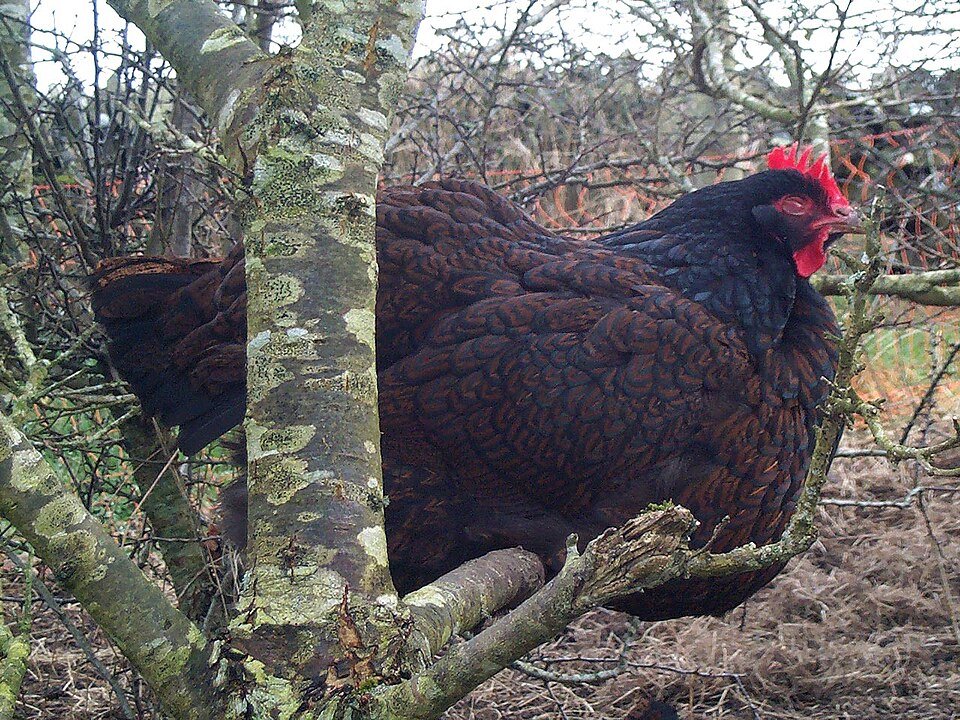
For a chicken’s night roost, choose usable stationary bar space, a suitable resting surface and a workable installation before choosing a ready-made frame. Of the five setups below, the PETSFIT Square Perch is the wall-style ladder option; the three wooden swing frames are activity-layout choices; and the compact Koutemie stand is a low daytime accessory. None comes with enough verified usable-bar measurements for us to assign an adult flock capacity.
We may earn a commission when you buy through links on this page.
Our picks at a glance
Start with the features that fit your setup.
Wall-style ladder layout
PETSFIT Square Roosting Perch

A broad ladder format; measure mounting position and usable bars before assigning night capacity.
- Footprint
- 55 × 40 in panel
- Overall height
- Installed height not verified
Four fixed perches + one swing
PETSFIT Four-Perch Swing Set

Four fixed perches and one moving accessory; overall height needs a landing and headroom check.
- Footprint
- 51 × 26.6 in footprint
- Overall height
- 38 in overall height
Also in this guide
- PETSFIT Two-Swing Roosting FrameTwo-swing activity layout
- PETSFIT Five-Perch Wooden SetLong, lower activity frame
- Koutemie Adjustable Low Roosting StandCompact low activity stand
Chicken roosting setups compared
| Product | Footprint | Overall height | Construction | Layout |
|---|---|---|---|---|
| PETSFIT Square Roosting Perch | 55 × 40 in panel | Installed height not verified | Wood + metal assembly | Fixed ladder format |
| PETSFIT Four-Perch Swing Set | 51 × 26.6 in footprint | 38 in overall height | Solid-wood frame | 4 perches + 1 swing |
| PETSFIT Two-Swing Roosting Frame | 50 × 30 in footprint | 34 in overall height | Wooden frame | 4 fixed perches + 2 swings |
| PETSFIT Five-Perch Wooden Set | 69 × 22.5 in maker footprint | 27.8 in maker height | Solid-wood frame | 5 perches + 1 swing |
| Koutemie Adjustable Low Roosting Stand | 17 × 15 in listed footprint | 15 in listed height | Metal, per selected listing | Low freestanding accessory |
Five ready-made roosting setups
01 / Wall-style ladder layout
PETSFIT Square Roosting Perch
Best for: A coop with a suitable mounting surface and enough room for a broad ladder panel.
- Footprint
- 55 × 40 in panel
- Overall height
- Installed height not verified
Why consider it
- Broad panel can be planned against a mounting surface.
- Nominal 55 × 40 in format matches the maker’s page.
Keep in mind
- Installed elevation and usable bar lengths are not established by the overall size.
- Mounting suitability and load capacity need confirmation.
Read the full analysis of PETSFIT Square Roosting Perch
The 55-by-40-inch square-style assembly is a different purchase from a freestanding playground. Its broad panel can suit a coop layout where the mounting surface, approach and cleaning access have already been planned. The selected listing and manufacturer page show the same nominal panel size. That agreement helps identify the format; it does not establish the length a hen can actually occupy on each bar.
The published 2.5-inch third dimension should not be read as the height at which chickens will sleep. It describes the listed assembly, while the installed height depends on placement. Before ordering, draw the panel on the intended surface and check where its lower and upper perches would land. Doors, nest access and the space needed to remove droppings can rule out a location that initially looks large enough.
Choose this format when you can verify the attachment method and usable perching surfaces. Skip it if you need a completely documented freestanding night-roost system with a stated load limit. The listing’s bird-count language is not a substitute for measuring unobstructed linear roost space for your own adult flock.
Key specs: Nominal panel 55 L × 40 W in; listed third dimension 2.5 in, not installed roost height; wood and metal assembly.
02 / Four fixed perches + one swing
PETSFIT Four-Perch Swing Set
Best for: A roomy covered run where a freestanding activity frame can remain outside the main walking route.
- Footprint
- 51 × 26.6 in footprint
- Overall height
- 38 in overall height
Why consider it
- Four fixed perches are distinguished from the single swing.
- Maker and selected listing give matching overall geometry.
Keep in mind
- A 38 in frame needs adequate overhead and approach space.
- Neither a swing nor marketing bird counts establish usable night-roost length.
Read the full analysis of PETSFIT Four-Perch Swing Set
This is a freestanding wooden frame, with four perches and one swing in the manufacturer’s description. At 51 inches long and 26.6 inches wide, it requires a real floor allocation rather than a spare strip along the wall. The 38-inch overall height also deserves attention in a low covered run. Measure the frame, the bird’s approach and the space above the top resting surface separately.
The swing is the distinguishing activity feature, but it should not be added to fixed night-roost capacity. A moving accessory and an unobstructed stationary bar solve different problems. If your purpose is daytime enrichment, this mixed layout is more relevant than a plain mounted rail. If your purpose is overnight accommodation, ask for individual fixed-bar lengths and cross-sections before deciding it serves the whole flock.
The maker and selected listing agree on 51 × 26.6 × 38 inches, although their model/SKU labels differ. The identification rests on matching geometry and the pictured layout, not an assumption that every PETSFIT swing listing is interchangeable. Confirm the exact selected version if the seller changes the photograph or dimensions.
Key specs: 51 L × 26.6 W × 38 H in overall; solid wood; four perches and one swing.

03 / Two-swing activity layout
PETSFIT Two-Swing Roosting Frame
Best for: A run activity station where two swings are useful and a 30-inch-deep frame will fit.
- Footprint
- 50 × 30 in footprint
- Overall height
- 34 in overall height
Why consider it
- Published geometry matches between selected offer and maker.
- Two swings provide a distinct activity layout.
Keep in mind
- The 30 in depth can consume a narrow run’s service aisle.
- Fixed-bar capacity and load limits remain unverified.
Read the full analysis of PETSFIT Two-Swing Roosting Frame
The two-swing frame has a nominal 50-by-30-inch footprint and a 34-inch overall height. Compared with the one-swing four-perch set, it is slightly shorter overall but takes more front-to-back space. That can matter more than a small difference in height when a run has a narrow service aisle. Mark out the footprint before assuming that a freestanding frame will leave room to refill water or carry a feeder.
PETSFIT describes four fixed perches plus two swings for this version. The second swing makes it an activity-layout choice, not proof of greater sleeping capacity. You still need the usable stationary lengths, a suitable surface and an approach that does not force birds through hanging accessories. Plan where droppings fall and how the area beneath the frame will be cleaned.
Both the selected Amazon listing and the maker identify a 50 × 30 × 34-inch wooden format. Other offers use similar names and bird-count claims, so match the dimensions and photograph rather than buying on the word “large.” This is the more relevant of these two frames when you specifically want two moving accessories and can accommodate the additional depth.
Key specs: 50 L × 30 W × 34 H in overall; wooden frame; four fixed perches and two swings.

04 / Long, lower activity frame
PETSFIT Five-Perch Wooden Set
Best for: A long run with room for a lower freestanding frame and an unobstructed route around it.
- Footprint
- 69 × 22.5 in maker footprint
- Overall height
- 27.8 in maker height
Why consider it
- Long, narrow format offers a different layout from the deeper frames.
- Five perches and the single swing are separately identified by the maker.
Keep in mind
- Nearly six feet of length needs a measured allocation.
- Minor size discrepancies and conflicting bird-count marketing need care.
Read the full analysis of PETSFIT Five-Perch Wooden Set
The maker lists this five-perch wooden set at 69 inches long, 22.5 inches wide and 27.8 inches high. Its long, relatively narrow format may suit a run where an almost six-foot frame can sit beside, rather than across, the main route. Length is the first purchase constraint: an attractive lower profile does not make a 69-inch object fit a short compartment.
The selected Amazon offer gives 69 × 22.4 × 28 inches. Those figures are close, but we retain the maker’s dimensions and flag the discrepancy rather than silently combining them. Leave a real clearance margin and confirm the supplied version when a fraction of an inch would decide whether it fits. The maker describes five perches and one swing, not five full-width adult sleeping bars of known usable length.
This is a candidate for a lower activity arrangement when the footprint works. It is not our recommendation for squeezing the largest advertised number of hens into a small coop: the seller and maker use different flock-count language, and neither resolves actual stationary length, access or load. Buy it for the layout you can verify, not for a number printed in a title.
Key specs: Maker: 69 L × 22.5 W × 27.8 H in; selected listing: 69 × 22.4 × 28 in; solid wood; five perches, one swing.

05 / Compact low activity stand
Koutemie Adjustable Low Roosting Stand
Best for: A compact daytime perch arrangement after checking the exact bar surfaces, stability and adjustment instructions.
- Footprint
- 17 × 15 in listed footprint
- Overall height
- 15 in listed height
Why consider it
- Small listed footprint can be compared with a compact activity space.
- Low overall format is distinct from the larger playgrounds.
Keep in mind
- No separate maker sheet was matched to this exact offer.
- Metal activity stand is not a documented adult wooden night-roost system.
Read the full analysis of Koutemie Adjustable Low Roosting Stand
The selected Koutemie offer lists a 17-by-15-inch footprint, 15-inch overall height and metal construction. That makes it a substantially smaller object than the wooden frames above. It belongs on a shortlist for a compact activity area, where an owner can check the actual resting surfaces and the stability of the assembled stand before introducing birds.
We did not locate a separate maker specification sheet for this exact model. The listed height is an overall dimension, not a verified set of adjustable perch elevations, and the product name alone does not establish a useful adjustment range. Ask for the range, bar cross-sections and assembly instructions if those details are essential to the purchase. We do not infer usable length by dividing the outside footprint.
We would not choose this as an automatic replacement for an adult flock’s wooden night roost, particularly in a cold-weather plan. The material and scale make it a different proposition from a fixed wood rail. Its reason to consider is the compact low format; its reason to pass is the lack of independently matched maker dimensions and a documented adult night-roost capacity.
Key specs: Selected listing: 17 L × 15 W × 15 H in, metal. Adjustment range, usable bar lengths and load limit not verified.
How we chose
We screened 48 catalog results, checked public Amazon offers and compared the identifiable formats with current maker descriptions. Five distinct setups remained for a documentary comparison. Four are from PETSFIT because we could match their published geometry and pictured layouts; this is a limited selection of ready-made formats, not a survey proving that one brand makes every good roost. We have not assembled, load-tested or observed chickens using these products.
Our criteria were footprint, overall height, fixed versus moving accessories, material description and what an owner still needs to measure. A matching outside dimension is useful for identification but cannot establish bird capacity, fastening strength or an appropriate sleeping surface. We did not rank products by advertised flock counts, star ratings, customer photographs or a claimed health benefit.
We excluded the similarly named PETSFIT wood-and-iron offer B0DMNRNFD2 because its size fields could not be cleanly matched to the maker version located. A small baby-perch offer also had conflicting size fields and did not belong in an adult night-roost comparison. We would not recommend either as a shortcut to a measured adult sleeping arrangement. A duplicate two-swing offer was omitted rather than counted as a separate design.
How to choose chicken roosting bars
Decide whether this is a sleeping place or an activity station
A fixed rail inside a secure coop, a ladder panel and a freestanding swing frame serve different layouts. Start by writing the task in one sentence: “Provide stationary sleeping space for eight adult hens,” or “Add an activity station to a covered run.” If the task is sleeping, a swing or moving perch should not be counted as though it were the same as a stable night bar.
That distinction changes the shortlist. A long wooden playground can have a useful activity layout while still lacking the dimensions needed to plan a whole flock’s night accommodation. Conversely, a simple rail can answer the sleeping task without providing hanging accessories. Do not pay for a more elaborate frame merely because its title includes a larger bird count.
Measure the lengths birds can actually occupy
University of Minnesota Extension’s cold-weather guide uses at least nine inches of roost space per bird as its planning guidance. Treat that as an adult-flock reference for the situation described, then check your birds and layout. A frame’s overall length is not necessarily one continuous usable bar: end brackets, supports, swings and the way birds reach different levels can reduce what is usable.
For a hypothetical eight-hen plan using nine inches each, the arithmetic is 8 × 9 = 72 inches, or six feet of usable stationary length. Two bars that each measure 32 usable inches provide 64 inches, not 72. Buying an assembly described as 36 inches wide does not prove that either bar has 36 unobstructed inches. Request the actual bar measurements if the difference decides the purchase.
Do not add every horizontal timber in a product photograph. A base rail may support the structure; an upper member may be inaccessible; a moving accessory may be intended for activity. Ask the maker which surfaces are intended to be occupied and what loads the assembled design is designed to carry. Where the specification is missing, leave the number unresolved.
Separate overall height from the occupied surface
A product’s maximum height tells you whether the object fits beneath a roof. It may not tell you where the top of each resting bar will sit. The square panel’s listed 2.5-inch third dimension is an especially poor substitute for installed roost elevation. The mounting position determines that elevation, so plan it before drilling or ordering attachment hardware.
Consider the approach, a clear landing area and the space above an occupied bird. A lower frame can still create an awkward route if the only approach is through a swing or beside a feeder. A taller frame can block a low roof even when its base fits. If birds have difficulty reaching or leaving the intended bar, ask an appropriate poultry adviser about an arrangement suited to them instead of treating a catalog height as universal guidance.
Check the resting surface and the material description
Minnesota’s guide describes wooden roosts in its winter housing guidance. A listing that says “metal” may refer to the whole frame, a bracket or an actual resting bar; those are different details. For the mixed-material square panel, confirm which surfaces birds stand on. For the Koutemie stand, do not assume that a metal activity accessory duplicates the function of the wooden night roost described in an extension guide.
Before using any assembly, inspect the actual bar profile, joins and exposed fasteners. A photograph cannot verify the finish of every delivered piece. If the maker does not publish the bar section or the load rating, ask rather than importing a measurement from a similar model. This comparison does not certify any selected product against injury, weather exposure or structural failure.
Plan the footprint before assembling
Mark the object and the service route
Use tape or a cardboard outline to represent the selected frame’s outside footprint. Then carry out the ordinary chores around it: open the coop door, reach the nest area, refill water and walk through with the equipment you normally carry. This is a layout exercise, not a product test. Its purpose is to find an obvious conflict before the assembled frame becomes difficult to move.
The 50 × 30-inch two-swing frame and the 69 × 22.5-inch five-perch frame illustrate the tradeoff. One uses more depth; the other needs a much longer uninterrupted run. Neither is automatically “space-saving.” Choose the geometry that leaves an actual route in your enclosure, including space to reach the area underneath.
Plan cleaning and attachment as part of the purchase
Droppings and loose material accumulate below occupied perches. Check whether you can reach the floor or remove the assembly without dismantling the whole coop. A frame that fits tightly between walls can make this routine harder. Record the clearance needed for your cleaning tool alongside the product dimensions.
For a mounted ladder, confirm that the installation instructions suit the actual wall or frame. Do not infer a fastening method or a load limit from the presence of a bracket in the photograph. For a freestanding set, follow its assembly and positioning instructions and inspect it before use. We did not establish anchoring requirements or certify the stability of these assemblies.
Choose a simple measured rail if the ready-made options do not answer the task
You do not need to buy one of these frames to have a good roost plan. If none supplies the usable lengths, resting surface or installation information you need, a properly planned fixed wooden rail may be a more straightforward project. Have the supports and attachment designed for the actual enclosure; this article is a buying comparison, not a structural construction plan.
The key purchase question is therefore “What does this arrangement let me verify?” The right answer may be a matched footprint and a useful activity layout. It should not be an unverified promise that a pictured playground sleeps a stated number of adult chickens.
FAQ
How much roosting space should I allow per chicken?
Minnesota Extension uses at least nine inches per bird in its cold-weather guidance. Apply it as a planning reference for adult birds and check the flock and arrangement. Count unobstructed stationary bar length, not the outside width of the frame or a seller’s advertised bird capacity.
Do chicken swings count as night-roost space?
Do not count a moving activity accessory as though it were a stationary sleeping bar. These selected frames combine different features. For overnight housing, first verify the usable fixed surfaces, their installation and the way birds can reach and leave them.
Is the tallest roosting frame the best choice?
Height alone does not decide suitability. Overall height, occupied bar elevation, headroom and landing space are separate measurements. A 38-inch frame can be a poor fit under a low roof or beside a busy service route, even when its base fits on the floor.
Can I use the product’s advertised chicken capacity?
Not as a substitute for measurements. We did not verify usable bar lengths or adult flock capacities for these five setups. Some maker and seller bird-count claims also differ. Request the actual fixed-bar dimensions and assess the layout for your own birds before relying on a count.
Which of these is best for a small coop?
The Koutemie has the smallest listed footprint, but that makes it a compact activity accessory, not a verified complete night-roost solution. A mounted panel also requires clearance and a suitable attachment surface. For a small coop’s sleeping plan, a measured stationary rail may answer the task more directly than any playground here.
Before you buy
Write down the purpose, measured footprint, usable fixed-bar lengths and installation details you still need. Choose a ready-made frame only when those answers fit your enclosure. If the purchase depends on a missing measurement or an advertised bird count, resolve that question before ordering.
Cover photograph by Outback hens at English Wikipedia, CC BY 2.5, via Wikimedia Commons. This contextual photograph does not depict a selected product or certify the photographed installation.
