For a chicken coop’s secured openings, compare welded hardware cloth by mesh size, wire specification, coating and the panels you need to cut. Chicken wire is not an equivalent material simply because both products appear under poultry fencing. These five rolls address different widths and quantities; none certifies a finished coop as predator-proof, and half-inch mesh should not be treated as a universal mouse barrier.
We may earn a commission when you buy through links on this page.
Our picks at a glance
Start with the features that fit your setup.
Long black-coated roll
VEVOR 24-inch Vinyl-Coated Hardware Cloth

VEVOR identifies the exact model and coating. Its 19-gauge description is after coating, so do not equate that number with verified bare-steel diameter.
- Roll size
- 24 in × 100 ft
- Mesh openings
- 1/2 × 1/2 in
Four-foot-wide panels
GoldPeak 48-inch Hardware Cloth
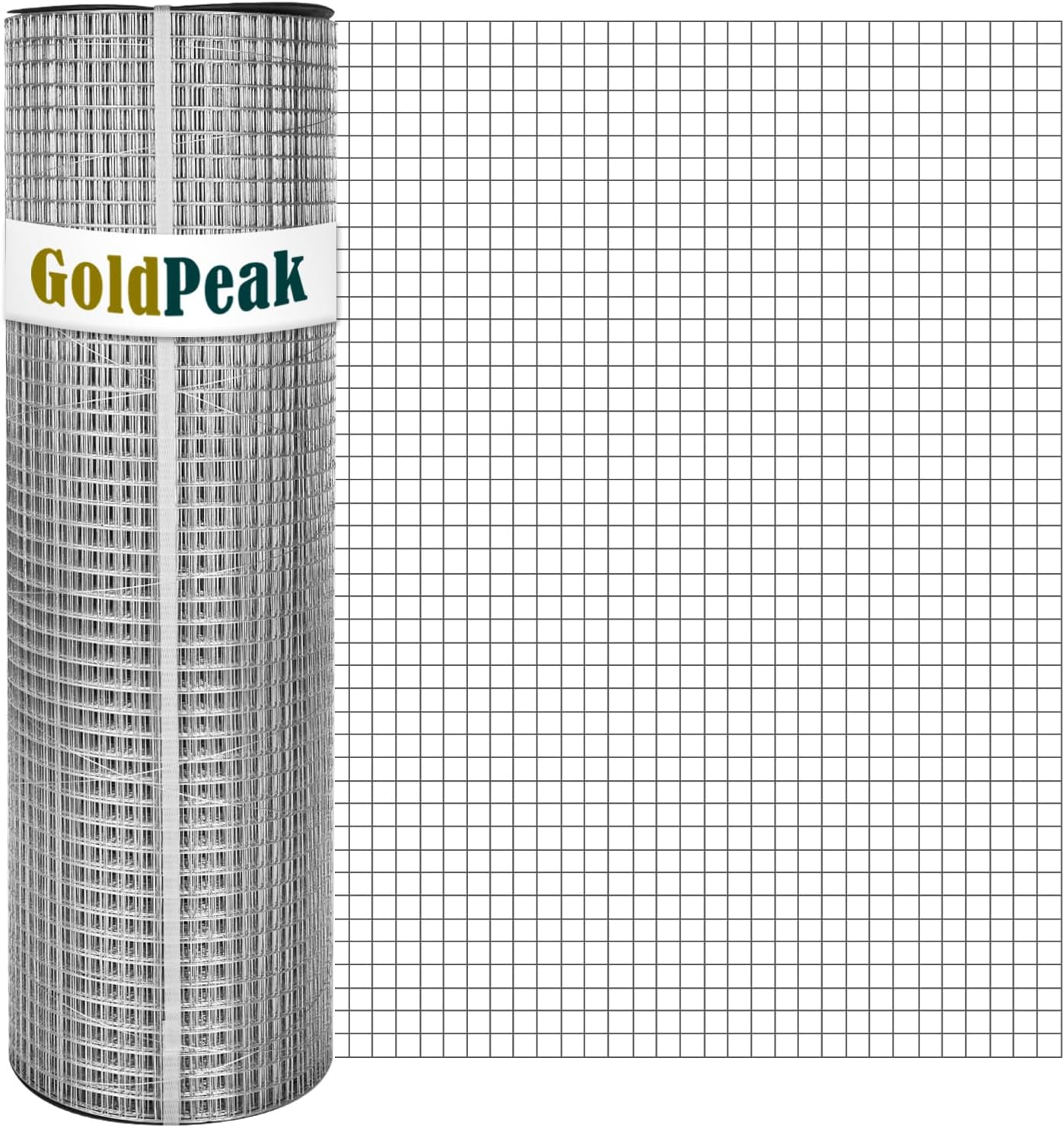
A 48-inch-wide roll with the same gross area as the 24-by-100-foot option but a different cutting layout. The selected size is 48 by 50.
- Roll size
- 48 in × 50 ft
- Mesh openings
- 1/2 × 1/2 in
Also in this guide
- Land Guard 16-inch Hardware ClothNarrow 50-foot roll
- YARDGARD 24-inch Hardware ClothShorter two-foot roll
- AggFencer 8-inch Hardware ClothNarrow repair strips
Chicken coop wire compared
| Product | Roll size | Mesh openings | Wire and finish | Gross area |
|---|---|---|---|---|
| Land Guard 16-inch Hardware Cloth | 16 in × 50 ft | 1/2 × 1/2 in | Listed 19-gauge galvanized steel | About 66.7 sq ft gross |
| VEVOR 24-inch Vinyl-Coated Hardware Cloth | 24 in × 100 ft | 1/2 × 1/2 in | Galvanized wire + black vinyl/PVC | 200 sq ft gross |
| GoldPeak 48-inch Hardware Cloth | 48 in × 50 ft | 1/2 × 1/2 in | Listed 19-gauge galvanized steel | 200 sq ft gross |
| YARDGARD 24-inch Hardware Cloth | 24 in × 25 ft | 1/2 × 1/2 in | Listed 19-gauge galvanized steel | 50 sq ft gross |
| AggFencer 8-inch Hardware Cloth | 8 in × 25 ft | 1/2 × 1/2 in | Listed 19-gauge wire; verify finish | About 16.7 sq ft gross |
Five hardware-cloth rolls

01 / Narrow 50-foot roll
Land Guard 16-inch Hardware Cloth
Best for: Narrow sections whose cut plan fits a 16-inch-wide roll without creating an unnecessary seam.
- Roll size
- 16 in × 50 ft
- Mesh openings
- 1/2 × 1/2 in
Why consider it
- Narrow width can match an existing strip without a long rip cut
- Exact offer identifies mesh size, gauge and roll dimensions
- Shorter length than the 100-foot options
Keep in mind
- Too narrow for many full-size panels without additional seams
- Exact 16-inch variant not independently matched on the maker’s current store
Read the full analysis of Land Guard 16-inch Hardware Cloth
The selected Land Guard listing specifies a 16-inch-by-50-foot roll with half-inch openings and 19-gauge galvanized wire. The narrow width can be useful when the panel you need is already narrow, such as a measured strip around a framed section. It is not a reason to build a wide barrier from several strips when a wider roll would avoid seams.
Land Guard’s current direct site shows a different 36-inch-by-100-foot half-inch family offering. We therefore take the selected 16-inch size from this exact Amazon offer, not from the direct store. The listing describes galvanizing after welding, but we have not independently inspected the coating or measured bare wire diameter.
Calculate about 66.7 square feet of gross material from 16/12 feet multiplied by 50 feet. Deduct cuts, overlaps and waste before using it as a shopping quantity. This is a practical width choice, not our strongest-wire award or a guarantee against every predator. Confirm the selected variant and inspect the supplied welds and edges before installation.
Key specs: Selected offer: 16 in × 50 ft; 1/2 × 1/2 in openings; listed 19-gauge galvanized wire; about 66.7 sq ft before waste.
02 / Long black-coated roll
VEVOR 24-inch Vinyl-Coated Hardware Cloth
Best for: A project needing a long two-foot-wide roll with a black-coated finish, after checking the finished-wire gauge description.
- Roll size
- 24 in × 100 ft
- Mesh openings
- 1/2 × 1/2 in
Why consider it
- Exact model dimensions and mesh documented by VEVOR
- Long roll for repeated two-foot-wide cuts
- Galvanized wire and black coating clearly identified
Keep in mind
- After-coating gauge does not verify bare-steel thickness
- A long roll needs handling space and a planned cutting layout
Read the full analysis of VEVOR 24-inch Vinyl-Coated Hardware Cloth
VEVOR’s model SS19121224100 has a 24-inch-by-100-foot roll, half-inch mesh and galvanized wire with a black vinyl/PVC coating. The manufacturer’s dimensions and model match the selected listing. A two-foot width and 100-foot length can suit repeated panels of the same height, provided the cut plan leaves room for attachment and overlap.
The important limitation is the gauge description. VEVOR calls its 19-gauge wire diameter an after-coating measurement. We cannot treat that as proof of the same bare-steel thickness as an uncoated 19-gauge product. Choose it for the documented dimensions and finish, not an unsupported claim that all 19-gauge labels provide equal structural resistance.
The roll contains 200 square feet before cuts and waste. Its black coating can be part of your finish preference, but it is not evidence of permanent corrosion immunity or a substitute for checking damaged areas and welds. The maker lists gloves and pliers; confirm the kit, then choose tools and fasteners appropriate to your actual frame and wire.
Key specs: SS19121224100; 24 in × 100 ft; 0.5 × 0.5 in mesh; galvanized wire + black vinyl/PVC; 19-gauge description after coating; 200 sq ft gross.
03 / Four-foot-wide panels
GoldPeak 48-inch Hardware Cloth
Best for: Measured panels that benefit from a four-foot width instead of joining narrower strips.
- Roll size
- 48 in × 50 ft
- Mesh openings
- 1/2 × 1/2 in
Why consider it
- Four-foot width can reduce seams in suitably sized panels
- Exact model encodes the selected 48-by-50-foot size
- 200 square feet before cutting losses
Keep in mind
- Wider roll can be awkward without support while measuring and cutting
- Coating sequence is a listing claim, not independently inspected
Read the full analysis of GoldPeak 48-inch Hardware Cloth
The exact GoldPeak model GAL-HD-1/2-48x 50 identifies a 48-inch-wide, 50-foot roll with half-inch mesh and a 19-gauge description. The listing also mentions other widths in its title; those are not the selected roll. Use the model and selected dimensions together before deciding how many pieces you can cut.
The useful difference is panel width. Four feet of width may let you cover a measured framed section with one piece rather than a seam between two narrow pieces. That does not eliminate the need to secure every edge or design the surrounding frame. Plan the fastening surface and any overlap before treating a panel’s nominal width as fully usable.
This roll and VEVOR’s 24-by-100-foot option each have 200 square feet of gross material, but they are not interchangeable cut plans. GoldPeak’s listing describes hot-dip galvanizing after welding. That is a supplier description, not our coating test or an independently verified service-life comparison; no claim of greater longevity is used to rank it.
Key specs: GAL-HD-1/2-48x 50; 48 in × 50 ft; 1/2-inch mesh; listed 19-gauge galvanized steel; 200 sq ft gross.

04 / Shorter two-foot roll
YARDGARD 24-inch Hardware Cloth
Best for: A smaller project that needs a two-foot-wide roll without committing to 100 feet of length.
- Roll size
- 24 in × 25 ft
- Mesh openings
- 1/2 × 1/2 in
Why consider it
- Shorter 25-foot quantity for a limited cut list
- Two-foot width can match smaller panels
- Model 308224B distinguishes it from other roll sizes
Keep in mind
- Conflicting listing language needs a supplied-material check
- 50 square feet is before overlaps and offcuts
Read the full analysis of YARDGARD 24-inch Hardware Cloth
The selected YARDGARD 308224B offer identifies a 24-inch-by-25-foot hardware-cloth roll and half-inch mesh. The stated 19-gauge format is also documented in retailer listings for this model. Its shorter length can match a small repair or a few framed panels when a 100-foot roll would leave more material than you can store or use.
The offer’s feature text inconsistently mentions hexagonal wiring and galvanizing before weaving, while its title and hardware-cloth identification describe a welded product. We do not use that conflicting prose to make a coating-sequence or comparative-strength claim. Confirm the square welded mesh and supplied specification before cutting; reject a delivery that does not match the intended material.
The gross area is 50 square feet, but the actual cut pieces determine whether one roll is enough. Read the manufacturer’s hardware-cloth handling guidance and use a suitable attachment plan for your frame. This is a smaller-quantity option, not a claim that a shorter roll is more economical or that a familiar brand name certifies the finished enclosure.
Key specs: Model 308224B; 24 in × 25 ft; 1/2-inch mesh; listed 19-gauge galvanized steel; 50 sq ft gross.

05 / Narrow repair strips
AggFencer 8-inch Hardware Cloth
Best for: A specifically measured narrow patch or framed strip, when eight inches covers the required attachment area.
- Roll size
- 8 in × 25 ft
- Mesh openings
- 1/2 × 1/2 in
Why consider it
- Exact current model and small strip dimensions identified
- Short roll can match a narrowly defined repair
- Half-inch openings stated in the selected offer
Keep in mind
- Very narrow width is unsuitable for broad enclosure panels
- Exact finish not independently matched to manufacturer documentation
Read the full analysis of AggFencer 8-inch Hardware Cloth
The current exact offer is AggFencer model 1908025, an 8-inch-by-25-foot half-inch-mesh roll with a 19-gauge title description. An older manufacturer-linked ASIN led to this different size, which is why the current dimensions are stated explicitly. Do not order it expecting the 16-inch or 48-inch roll mentioned in another page or search result.
This is a narrow-work option. Eight inches can be useful only when your measured repair or framed strip, including its attachment area, fits that width. It is unsuitable as a convenient default for a broad run wall. Joining many strips creates additional edges and seams that need their own design and secure attachment.
AggFencer’s direct site describes after-weld galvanizing for a different 16-by-100-foot model. We do not transfer that exact construction claim to this selected 8-inch roll without matching documentation. Confirm the supplied finish before buying for a particular exposure. Its approximately 16.7-square-foot gross area is an inventory calculation, not an installed protection rating.
Key specs: Model 1908025; 8 in × 25 ft; 1/2-inch mesh; listed 19-gauge wire; about 16.7 sq ft gross. Confirm the supplied finish.
How we chose
We compared five exact Amazon offers by opening size, stated gauge or construction, roll dimensions and the limits of their supporting documentation. The photographs come from those exact product pages. We checked manufacturer information for Land Guard, VEVOR, AggFencer and YARDGARD, while recording when the direct-store version did not match the selected size. GoldPeak’s coating description remains a listing claim.
These are conditional material choices for a cut plan, not results from pull tests or long-term outdoor trials. The two highlighted cards show a long two-foot-wide coated roll and a wider four-foot roll. Other picks cover a narrower strip or a smaller total quantity. Different lengths from the same product family were not counted as additional models.
We excluded poultry netting as an interchangeable substitute and refused image captures when the requested ASIN did not match the page. Current replacement candidates were checked under their own ASINs. We have not measured bare wire diameter, weld strength, corrosion resistance or wildlife exclusion, so those properties are not assigned performance scores.
How to choose chicken coop wire
Choose the opening size for the job
University of Maryland Extension recommends half-inch hardware cloth over coop windows. That is useful guidance for a particular opening, not proof that every half-inch roll is equally strong or that a completed enclosure excludes all animals. Check the target opening, the wire construction and the way the material will attach to the frame together.
Mouse exclusion is a different threshold. The National Park Service rodent-exclusion manual, hosted by Utah State, specifies smaller openings for mouse exclusion and discusses stronger hardware cloth. If keeping mice out is the goal, do not select one of these half-inch rolls merely because its title says rodent protection. Verify an appropriate specification for that target instead.
A smaller mesh opening does not by itself establish stronger wire. Gauge, material and welding remain separate questions. Likewise, a roll sold as chicken wire can refer to a different construction from square welded hardware cloth. Read the actual specification and inspect the supplied material rather than relying on the search category.
Keep gauge and coating measurements separate
Ask whether a stated diameter describes bare metal or the finished coated wire. VEVOR’s selected model explicitly describes its 19-gauge diameter after coating. We cannot use that number to prove the same steel thickness as a bare-wire 19-gauge product. Where the source does not identify the basis, retain the limitation instead of converting it into a strength claim.
Galvanized wire has a zinc coating; some products add vinyl or PVC. A manufacturer may distinguish coating before or after welding, but use that claim only for the exact documented model. Do not transfer a sequence from a different size or a generic brand page. Conflicting listing language is a reason to seek clarification, especially when it also describes a different mesh construction.
Inspect the delivered roll before cutting: selected width and length, opening pattern, damaged coating, broken welds and obvious wire defects. A listing is not a quality inspection of the roll in your hands. Contact the seller about mismatches or damage rather than building around them and assuming the finished frame will compensate.
Buy for panel dimensions, not gross square footage
Two rolls can contain the same gross area but suit different jobs. A 24-inch-by-100-foot roll and a 48-inch-by-50-foot roll each contain 200 square feet. The first provides a long two-foot width; the second provides a shorter four-foot width. Your framed panel’s shape determines which avoids extra seams and wasted material.
As a measurement example, a 48-inch-wide panel cannot be covered across its full width by one 24-inch-wide piece. Two pieces add a seam and need allowance for the attachment design. Do not halve a gross-area total and assume the remaining roll automatically yields every cut shape you need. Draw the pieces in the roll’s actual width and reserve material for overlaps and offcuts.
Very narrow rolls have a limited role. An 8-inch strip may suit a measured repair but is not a convenient substitute for a broad wall panel. Include the fastening area in the measurement. A patch that covers only the visible hole may leave too little material to secure properly around its edges.
Turn the cut list into a complete enclosure check
Record each window, vent, run panel or repair separately with the frame dimensions and required cut. Decide which edges meet framing and where joins occur. Include how you will secure the perimeter, inspect it later and avoid exposed sharp ends where birds or people can contact them. Hardware cloth alone is not the whole protection system.
Read the YARDGARD hardware-cloth handling instructions for cutting and handling guidance, along with the instructions for your supplied product. Wear appropriate protection and support the roll while measuring and cutting. Use fasteners and a frame design suitable to the project; a few unspecified staples should not become a universal attachment recipe.
Ground-level work needs its own plan. The dimensions of an apron, buried section or foundation depend on the site, enclosure and animals you are addressing. We do not establish a universal burial depth from a retailer’s feature bullet. Ask a local extension or wildlife specialist when the threat or site requirement is unclear, and check the whole perimeter instead of treating one strip of wire as the complete solution.
Recheck doors, latches, corners and the connection between house and run. A secure mesh panel does not resolve an adjacent gap or an opening left unlatched. Inspect the installation after repairs and after conditions that could loosen or damage it. The useful purchase is the roll that fits a complete, maintainable attachment plan, with its limitations understood.
FAQ
Is chicken wire the same as hardware cloth?
No. Poultry netting and square welded hardware cloth can have different construction and strength. Compare the actual specification, not the poultry-fencing category label.
Will half-inch hardware cloth keep out mice?
Do not treat it as a universal mouse-exclusion specification. Check smaller-opening guidance and the required wire strength for the target animal and installation.
Is every 19-gauge roll the same thickness?
Do not assume it. Check the material and whether the stated diameter includes coating. VEVOR describes the selected model’s gauge after coating, which does not verify its bare-steel diameter.
Which roll has more coverage: 24 inches by 100 feet or 48 inches by 50 feet?
Both have 200 square feet of gross material. The panel shapes, seams, overlaps and waste determine which gives more useful cuts for your project.
Can hardware cloth make a coop predator-proof?
No roll alone certifies that result. The frame, attachment, gaps, doors, ground perimeter and maintenance are also part of the enclosure.
Match the roll to the measured job
Choose the required opening size first, then check wire and coating descriptions and draw the cuts in the actual roll width. Resolve conflicting specifications before installing. A suitable width with clear documentation is more useful than an unsupported promise of rust-proof or predator-proof protection.
Cover photograph by Kenneth Allen, CC BY-SA 2.0, via Wikimedia Commons. This contextual photograph does not depict a selected product or certify the photographed installation.
